
Laser & Photonics Components
Custom A-QCW Annular Laser Diode Stack Package Housing
Precision-machined annular housing for A-QCW laser diode bar stacks used for side-pumping rod-shaped gain media. Housing only, to customer drawings.
ExploreTry a part name, a material (Kovar, SUS304) or a process (CNC turning, anodizing). Press Enter for full results.
Jingyixin manufactures custom high-precision ceramic-to-metal package housings for electronic, optoelectronic and sensor assemblies.
Design considerations
Technical specifications
| Parameter | Value | Unit / Note |
|---|---|---|
| Product type | Custom Ceramic-to-Metal Package Housing | |
| Material options | Kovar / stainless steel / copper alloys; ceramic grade per approved design | Design review; not interchangeable by default |
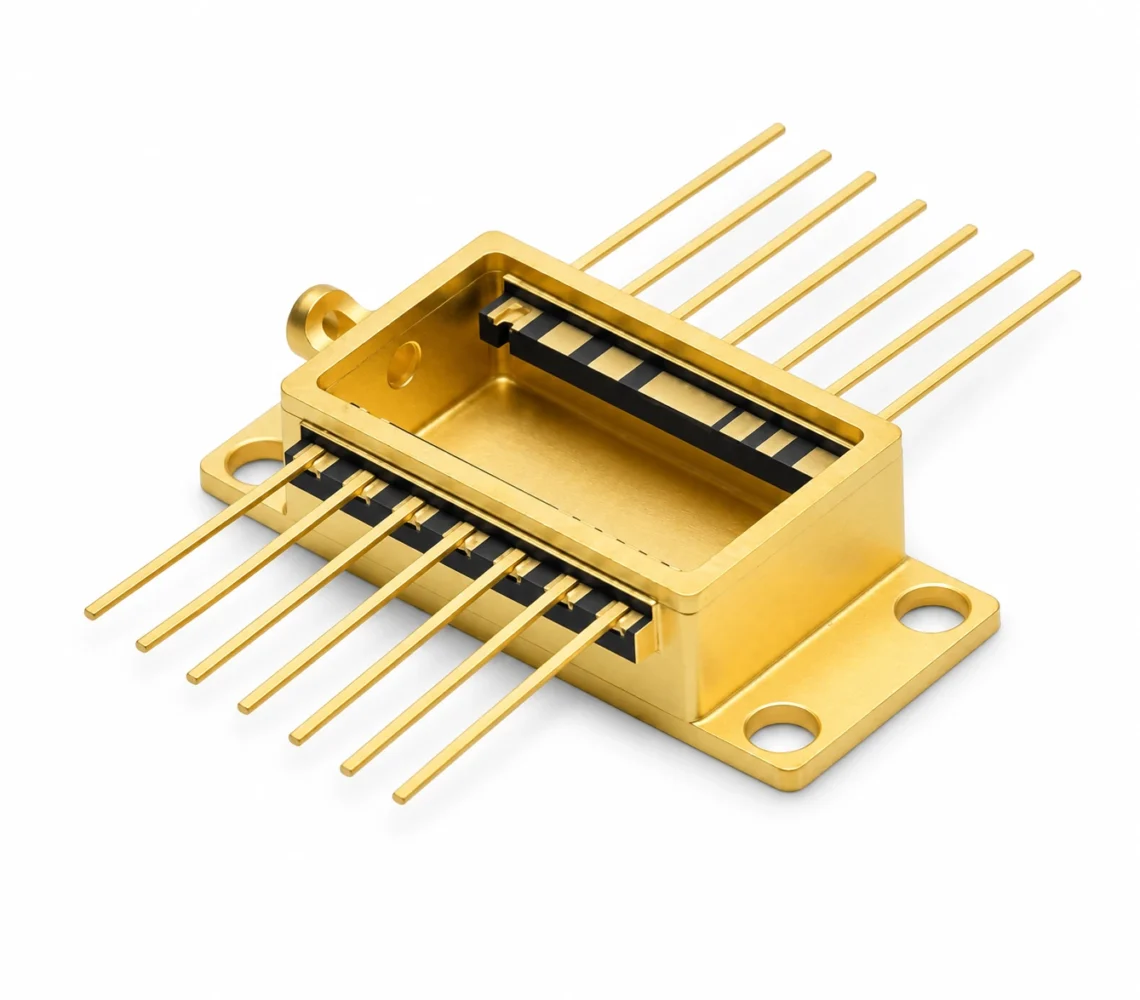
| Critical features | Metal cavity, flanges and ceramic-insulated electrical feedthroughs by design | |
| Finish | Gold / nickel / selective plating; thickness and coverage per drawing | |
| Dimensions and tolerances | Per approved drawing | Reviewed for material, geometry and process |
| Inspection | Dimensions and visual condition; CMM for applicable features | Methods and reports agreed per project |
Values shown are per this product entry; customer drawings take precedence.
Manufacturing
Applications
Potential applications include hermetic or protective packaging designs for optoelectronic modules, laser devices, infrared sensors, industrial sensors, electronic control modules and specialty instrumentation. Suitability for vacuum, high-voltage or hermetic service must be verified against the specific product design and qualification requirements.
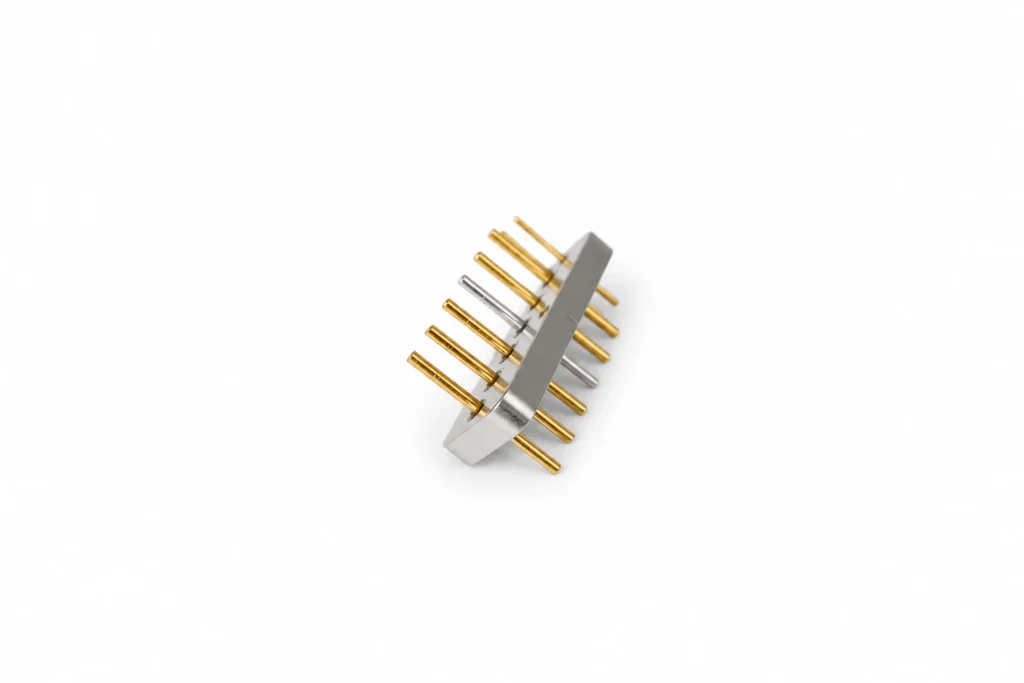
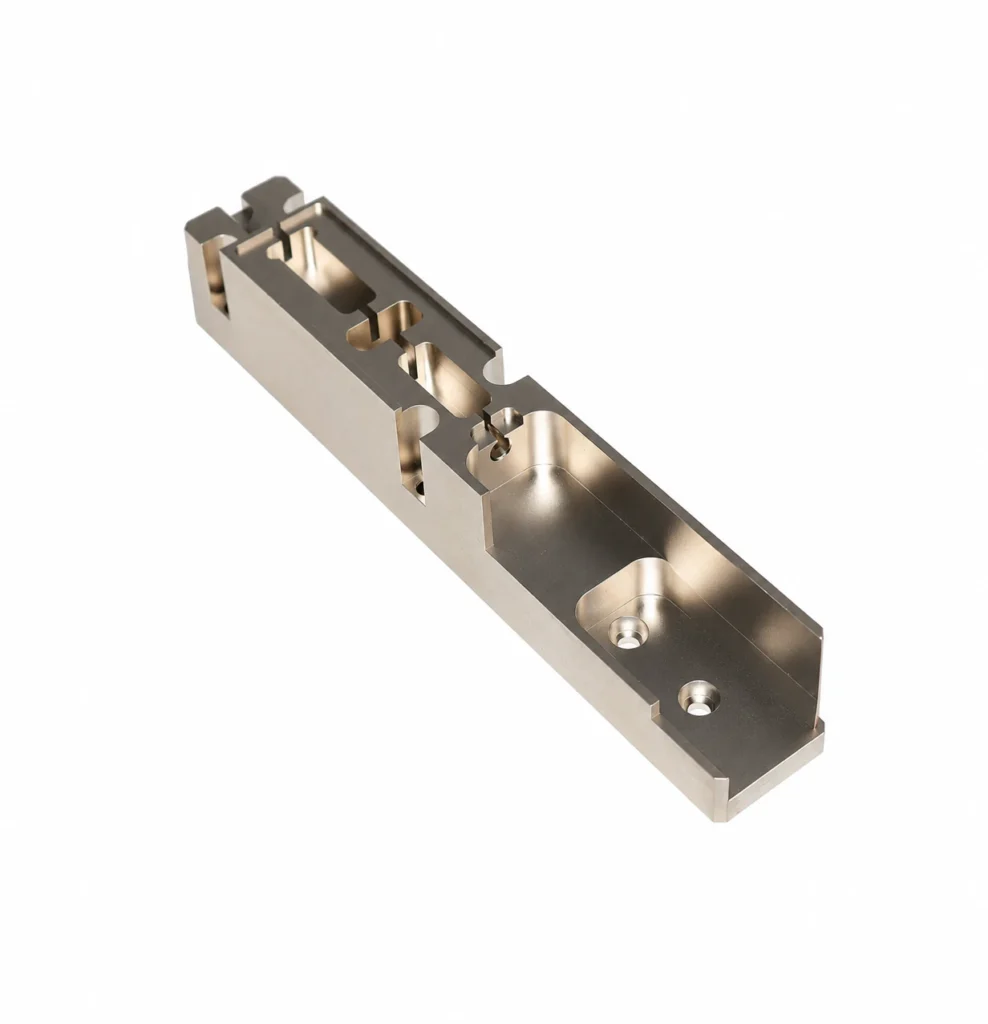
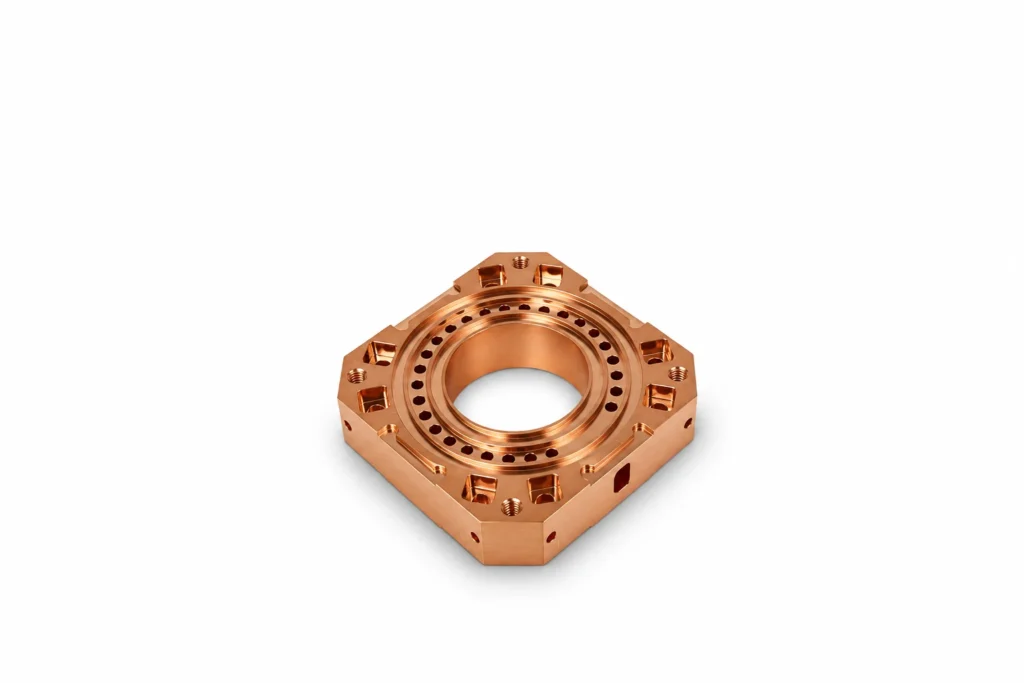
Provide the drawing revision, 2D drawing and STEP model, quantity, material grade, requirements for metal cavity, flanges and ceramic-insulated electrical feedthroughs by design, coating areas and thickness, and acceptance criteria. Photographs show custom variants, not a standard size or pin count.
Insulation, leak tightness, vacuum suitability, electrical ratings and thermal performance require design-specific verification under agreed conditions; appearance or material alone does not establish them.
FAQ
Provide the drawing revision, 2D drawing and STEP model, quantity, material grade, requirements for metal cavity, flanges and ceramic-insulated electrical feedthroughs by design, coating areas and thickness, and acceptance criteria. Photographs show custom variants, not a standard size or pin count.
Metal cavity, flanges and ceramic-insulated electrical feedthroughs by design; dimensions, tolerances and process compatibility are confirmed during engineering review.
No. Tolerances depend on the drawing, material and geometry. Insulation, leak tightness, vacuum suitability, electrical ratings and thermal performance require design-specific verification under agreed conditions; appearance or material alone does not establish them.
More in this family
Laser & Photonics Components
Precision-machined annular housing for A-QCW laser diode bar stacks used for side-pumping rod-shaped gain media. Housing only, to customer drawings.
ExploreLaser & Photonics Components
Jingyixin manufactures custom high-precision dual-row multi-pin electrical feedthrough assemblies for electrical interconnection in optoelectronic packages, laser systems, semiconductor equipment and industrial instruments.
ExploreLaser & Photonics Components
Custom precision-machined fiber optic mounts and holders designed for positioning, supporting, and securing optical fibers or related optical components.
ExploreRequest a Quote
Share your drawing, material, quantity and critical requirements for a manufacturing review.