
On this page
Engineering summary. This guide compares anodizing for aluminum parts, chemical passivation for stainless steel, and metal plating for precision components. Choose the finish against the alloy, service environment and drawing requirements. These are the application ranges discussed here: anodizing also applies to other metals, including titanium, using different processes. This does not imply that every finish is available for every JYX project.
For project planning, review our aluminum anodizing capability and electroplating capability. For coating choices, see Type II vs Type III anodizing.
The one rule that decides everything: match the process to the substrate
Start with the alloy and the surface function. For the applications compared here, stainless-steel chemical passivation removes free iron and contamination, aluminum anodizing forms an oxide layer, and plating adds a metal coating. A process specified for one substrate cannot be transferred to another without review. State whether the goal is corrosion resistance, wear, appearance, solderability or electrical contact.
Chemical passivation of stainless steel
Passivation does not add a coating. Stainless steel protects itself with a thin chromium-oxide layer that forms naturally; passivation cleans that layer and removes embedded free iron and contamination so the natural oxide can do its job. Two consequences matter on a drawing: it does not meaningfully change dimensions or surface finish, so it suits precision parts where you cannot give up tolerance; and it is not a colour or a cosmetic upgrade — a part that looks “brighter” after treatment is usually electropolished, not passivated. If the goal is strictly corrosion resistance on stainless with no dimensional change, passivation is the right call.
Anodizing aluminum parts
Anodising is an electrochemical conversion — it grows a thicker, harder oxide on the aluminium surface itself, and it can take dye for colour. Because the oxide grows out of the surface (and into it), it changes dimensions: the layer has a thickness, and a part anodised after final machining is slightly larger than the bare part. So on a precision aluminium part, either the drawing has to leave an allowance or the critical features have to be masked. The layer thickness tracks process parameters like voltage and acid concentration, which is why the anodising spec — Type II vs Type III, and the target thickness — has to be on the drawing, not left to the shop.
Plating: depositing a different metal (most substrates)
Plating is the only one of the three that puts a foreign metal on the part — nickel, gold, zinc, tin, copper. That is its power and its complication. It works on steel, copper, aluminium, stainless and more; it can give solderability (gold), wear and diffusion resistance (nickel), or sacrificial corrosion protection (zinc on steel). It is also where most of the process control lives: the stack and each layer’s thickness, the adhesion, and which zones are plated versus masked all have to be specified. On stainless and on aluminium, plating usually needs an activation or an underplate to bond — a passive stainless surface or an aluminium oxide will not accept a coating without preparation.
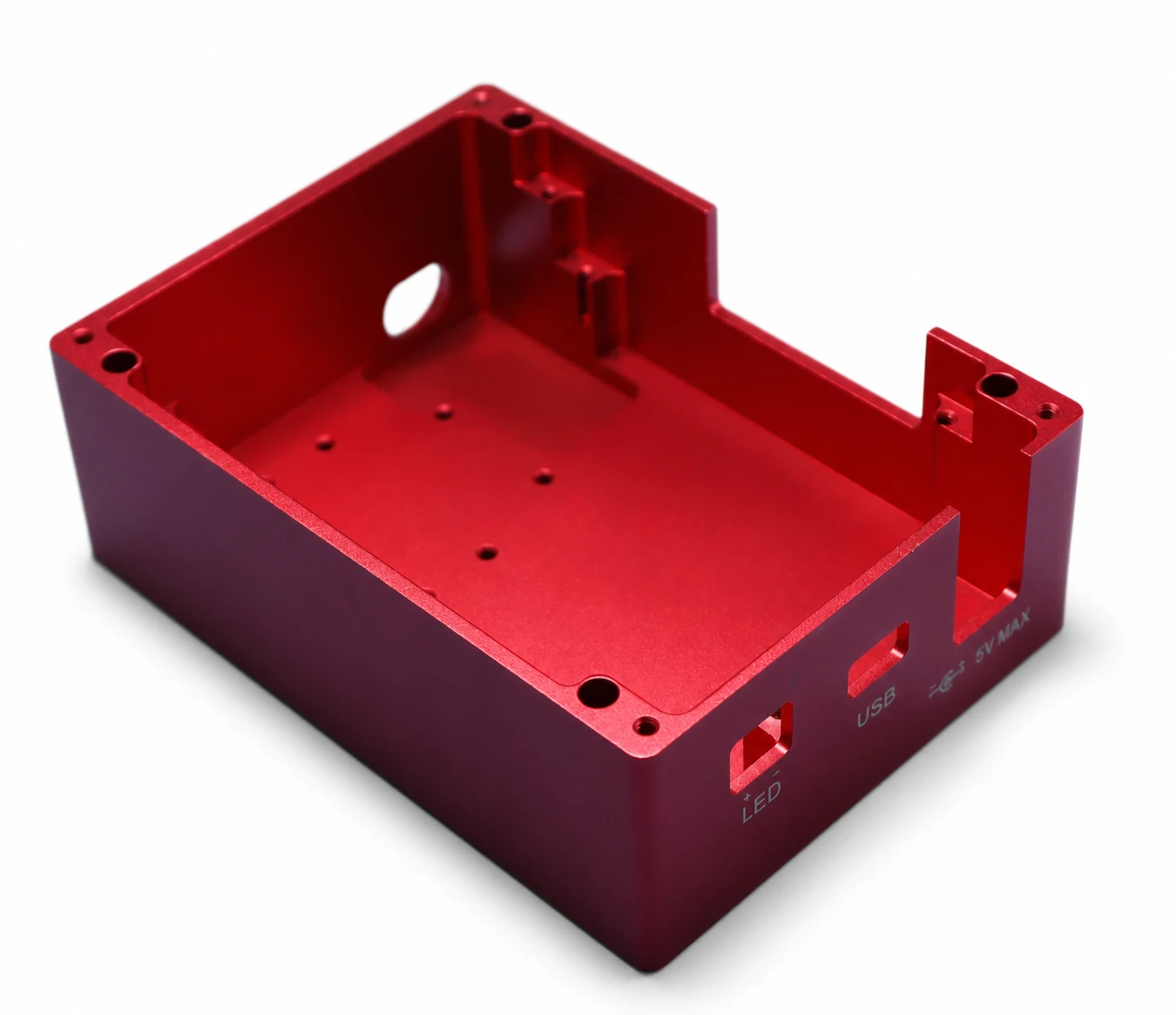
Side-by-side: what each one is for
| Process | Base metal | What it does | Changes dimensions? | Typical goal |
|---|---|---|---|---|
| Passivation | Stainless steel | Removes free iron; lets the natural chromium oxide protect | Normally negligible; verify critical features | Corrosion resistance on a suitable stainless grade |
| Anodising | Aluminium | Grows a thicker oxide layer; dyeable | Yes (oxide thickness) | Wear + corrosion + colour; spec-driven |
| Plating | Steel, copper, aluminium, stainless | Deposits another metal on the surface | Yes (layer thickness) | Solderability, wear, diffusion barrier, sacrificial protection |
Applications covered by this guide. Confirm the process specification, drawing and service conditions; this table is not a complete list of treatable metals.
The mistakes that cost a batch
- Transferring a process specification to a different alloy. Stainless-steel chemical passivation and aluminum anodizing are different treatments. If an aluminum drawing calls for “passivation,” clarify whether a conversion coating or another specified treatment is intended.
- Asking for passivation when you want “bright”. Passivation removes free iron; it does not polish. If the requirement is a bright finish, that is electropolishing, a different process.
- Anodising after final machining without an allowance. The oxide grows the part; a tight bore or a mating face can go out of tolerance.
- Plating a passive stainless face with no activation. The coating will not adhere, or will flake after service.
What we make, and what we do not
We do electroplating (including selective gold with a nickel underplate) and anodising (Type II and III) on machined parts, and we machine and prepare the surfaces they go on. We machine and etch thin metal parts as well. Passivation of stainless is available where the project calls for it; where it is a process we do not run in-house, we will say so and not quote it as if we do.
We do not publish a house thickness or a colour match as a standard, because the right value follows your alloy, your service environment and the drawing. We will tell you when your requested finish does not match your substrate or your goal — that conversation is cheaper than a stripped batch.
What to send with the RFQ
Send the drawing revision, 2D drawing and STEP model; the alloy and its condition; what you are protecting against (corrosion, wear, solderability, colour, conductivity); which process you intend and, if it matters, the spec and its revision (for anodising, the Type and target thickness; for plating, the stack and each layer); which zones must stay bare or masked and the mask boundary tolerance; whether the part is dimensionally critical (so an allowance or a mask can be planned); and the inspection and acceptance criteria. With those we can tell you whether the process you asked for is the right one before any metal is treated.
Send the drawing, alloy and finish requirements for review
Frequently asked questions
Can I use a stainless-steel passivation specification on aluminum? Do not transfer it directly. Clarify the treatment, applicable standard and alloy; “passivation” may be used for different surface treatments. This guide compares stainless-steel chemical passivation with aluminum anodizing. Titanium anodizing is a separate process and needs its own specification.
Is passivation the same as brightening? No. Passivation is functional — it cleans the surface so the natural oxide protects. If you want a bright, polished look on stainless, that is electropolishing, a separate process. Customers often ask for one and mean the other.
Which finish for a precision aluminium part I cannot lose tolerance on? Anodising grows the surface, so on critical features you either plan an allowance or mask them. If any dimensional change is unacceptable and the material is aluminium, reconsider the requirement — there is no zero-growth anodise; the drawing has to account for the layer.
Process reference
Aalberts: anodizing of aluminum and titanium explains the substrate-dependent processes. Confirm project availability with JYX before ordering.