
On this page
Engineering summary. A fixture does not hold a part — it fixes its six degrees of freedom so the same part lands in the same place every time. Get that wrong and no machine accuracy saves you: the tool is fine, the location is not. The rules are old and simple — 3-2-1 locating, no over-constraint, a round pin plus a diamond pin, hardened wear surfaces — and most fixture failures trace back to breaking one of them. This page is about designing a fixture that repeats, not one that just looks strong.
A part has six degrees of freedom — a fixture must remove all of them, once
A free rigid body can move three ways in translation (X, Y, Z) and rotate three ways (pitch, yaw, roll). A fixture’s only real job is to remove those six, and the classic method is 3-2-1: three points define the primary plane, two points on that plane define a line and stop rotation, and one final point stops the last motion. Three-two-one equals four and two equals one — 3 + 2 + 1 = 6. Every locating scheme is a version of this. When a fixture “does not repeat,” the first thing to check is whether it actually removes all six, or removes four and lets the part rock on two.
Over-constraining is as bad as under-constraining
The instinct is to add more pins and more clamps for safety; the result is usually worse. A part is not perfectly rigid, and a fixture that constrains it in more places than the six it needs fights itself: the extra contact pushes the part, the part pushes back, and it settles into a stressed, twisted position that changes when you clamp. That is over-constraint — it introduces internal stress and distortion before the tool even touches the part. The correct scheme removes exactly six degrees of freedom, no more. Extra pins should only be supports that do not locate, or clamps that hold without deciding position.
Round pin plus diamond pin: the trick that prevents binding
When two holes locate a part, two round pins will bind — the distance between the holes is never exactly nominal, so two round pins fight over it and the part will not seat. The standard solution is one round pin and one diamond (relieved) pin: the round pin fixes X and Y, and the diamond pin, cut back on its sides, fixes only the rotation and lets the second hole’s centre-distance tolerance be absorbed. The same logic picks pin type by requirement — round for a positive two-axis fix, diamond where a second hole must not over-constrain, tapered for lead-in and self-centring on a rough part. Choosing the pin type is a locating decision, not a purchasing one.
The pin and bushing pair is where repeatability lives
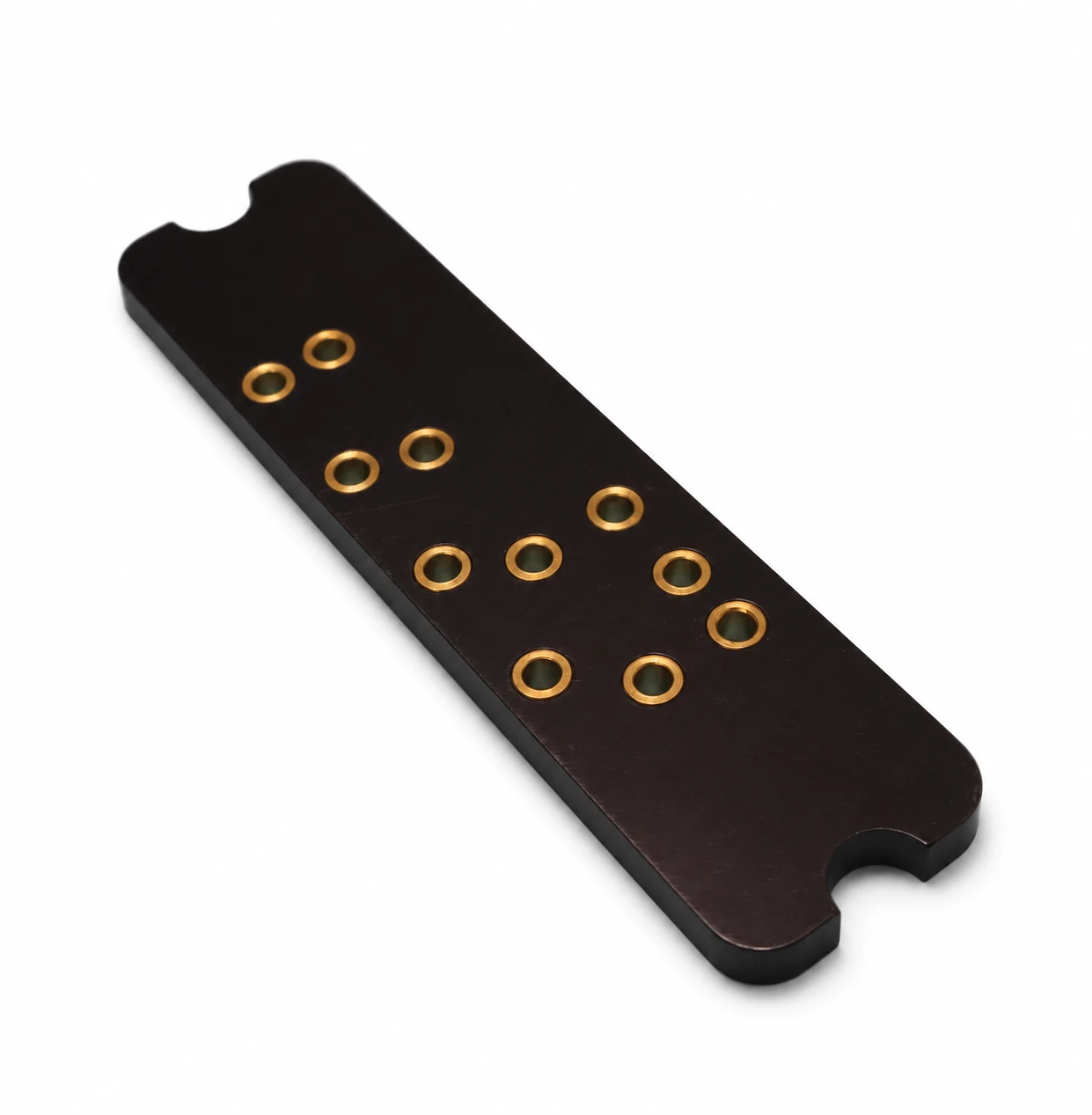
In a fixture that gets loaded thousands of times, the locating pin wears and the hole in the fixture wears, and repeatability drifts before anything visibly breaks. Pressing a hardened bushing into the fixture plate — and pairing it with a hardened pin — is what holds position over the fixture’s life: the bushing takes the wear so the plate does not, and it can be replaced when it does wear. The fit between pin and bushing is a deliberate balance: tight enough to locate accurately, loose enough that the operator can load the part without a hammer. Specify that fit, and the material and hardness of both, or repeatability becomes a guess.
Clamps hold; they do not locate
A clamp’s job is to keep the part against the locators, not to push it into position. A clamp that also locates will move the part as it tightens, and the harder the operator tightens, the more it moves. Design so the clamps push the part onto the locators, not away from them, and so clamping force is repeatable — a torque spec on the clamp, or a over-centre toggle that gives the same force every time. On a thin or flexible part, a heavy clamp is another source of distortion; support it under the clamp so it does not bend into the fixture.
Why the fixture’s own material and hardening matter
A fixture is a precision part that is used, not a weldment that is admired. Its locating surfaces wear, its pins wear, and its accuracy is only as good as its hardness and stability. Locating pins and bushings are typically hardened tool steel; plates are stress-relieved and, where repeatability matters, hardened or coated at the wear faces. A soft fixture measures perfect on day one and drifts by month six. If the fixture has to hold ±0.01 mm over a hundred thousand cycles, the wear surfaces — not the base plate — are the design decision.
What we make, and what we do not
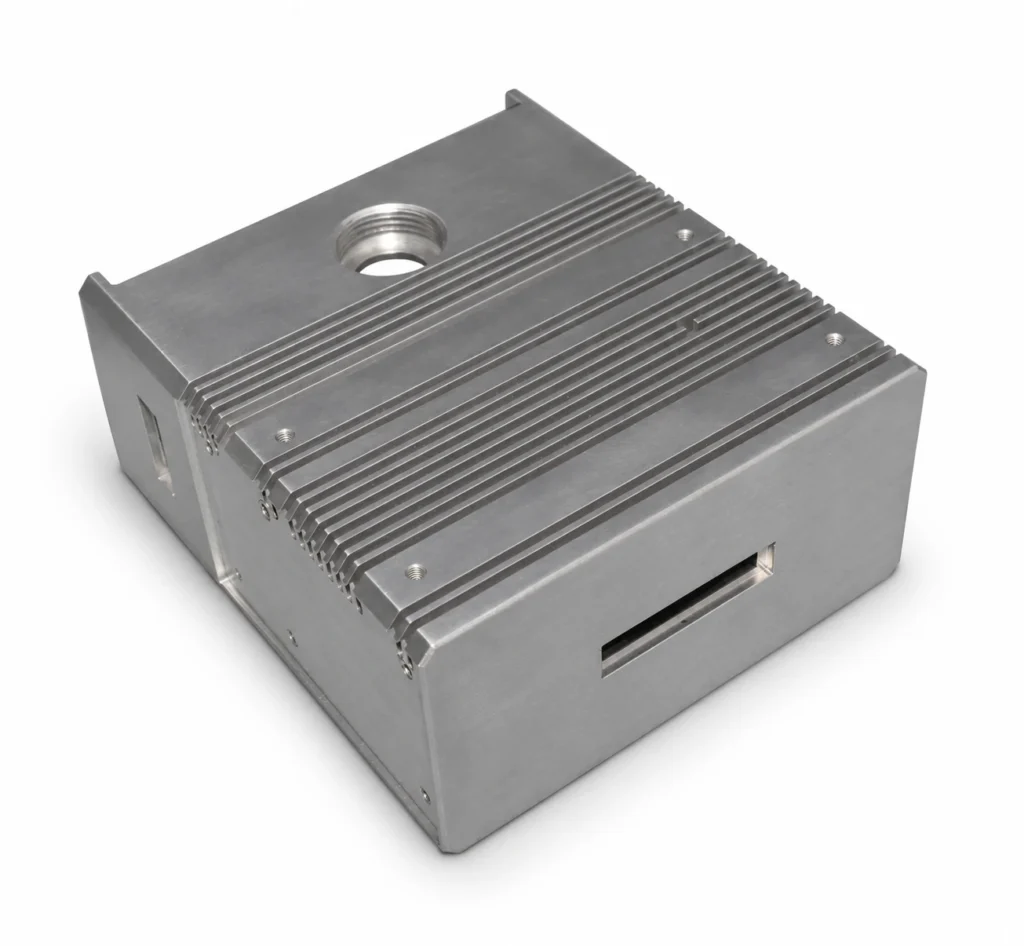
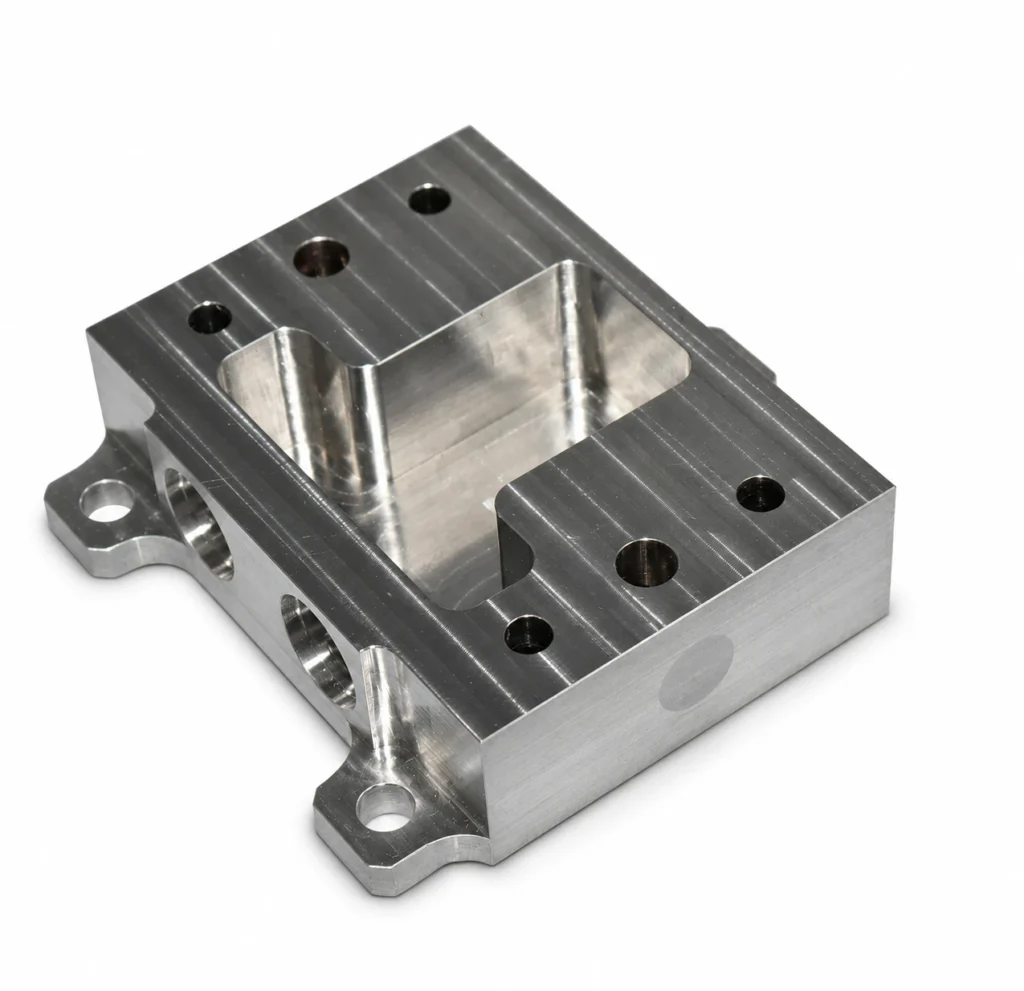
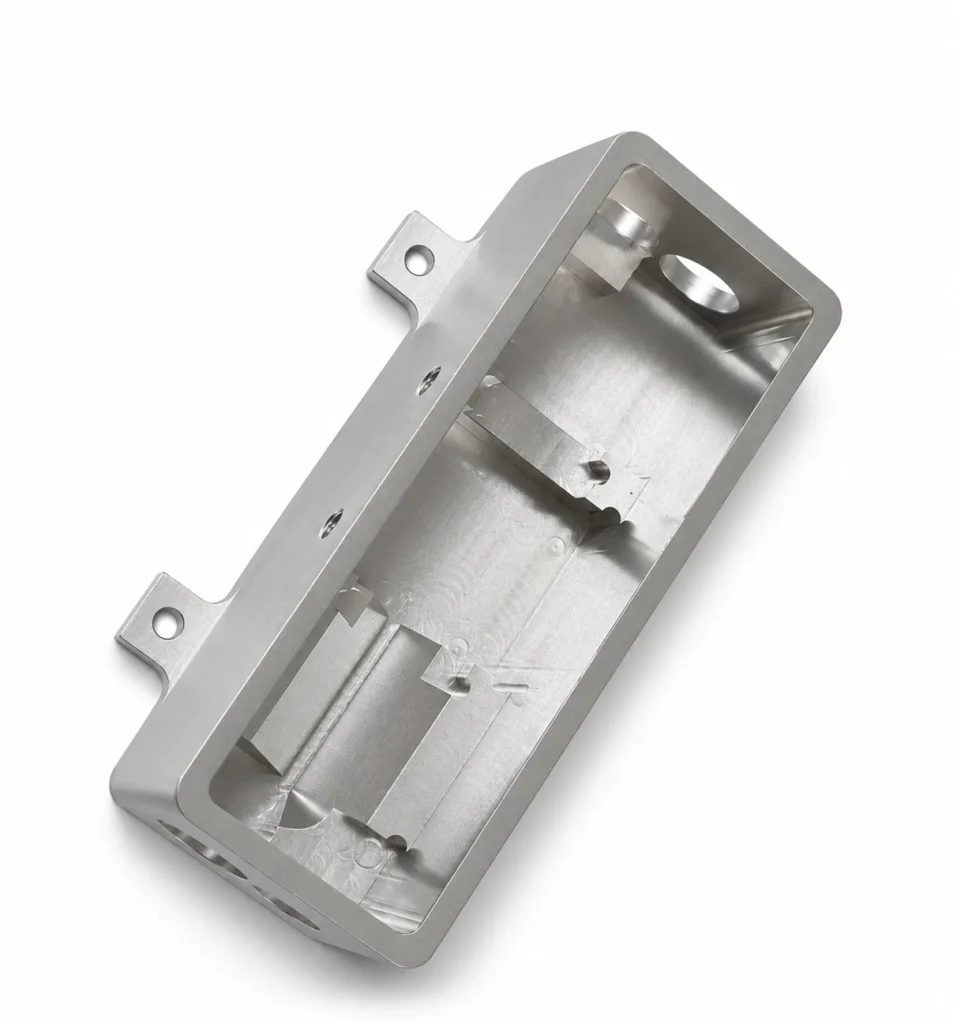
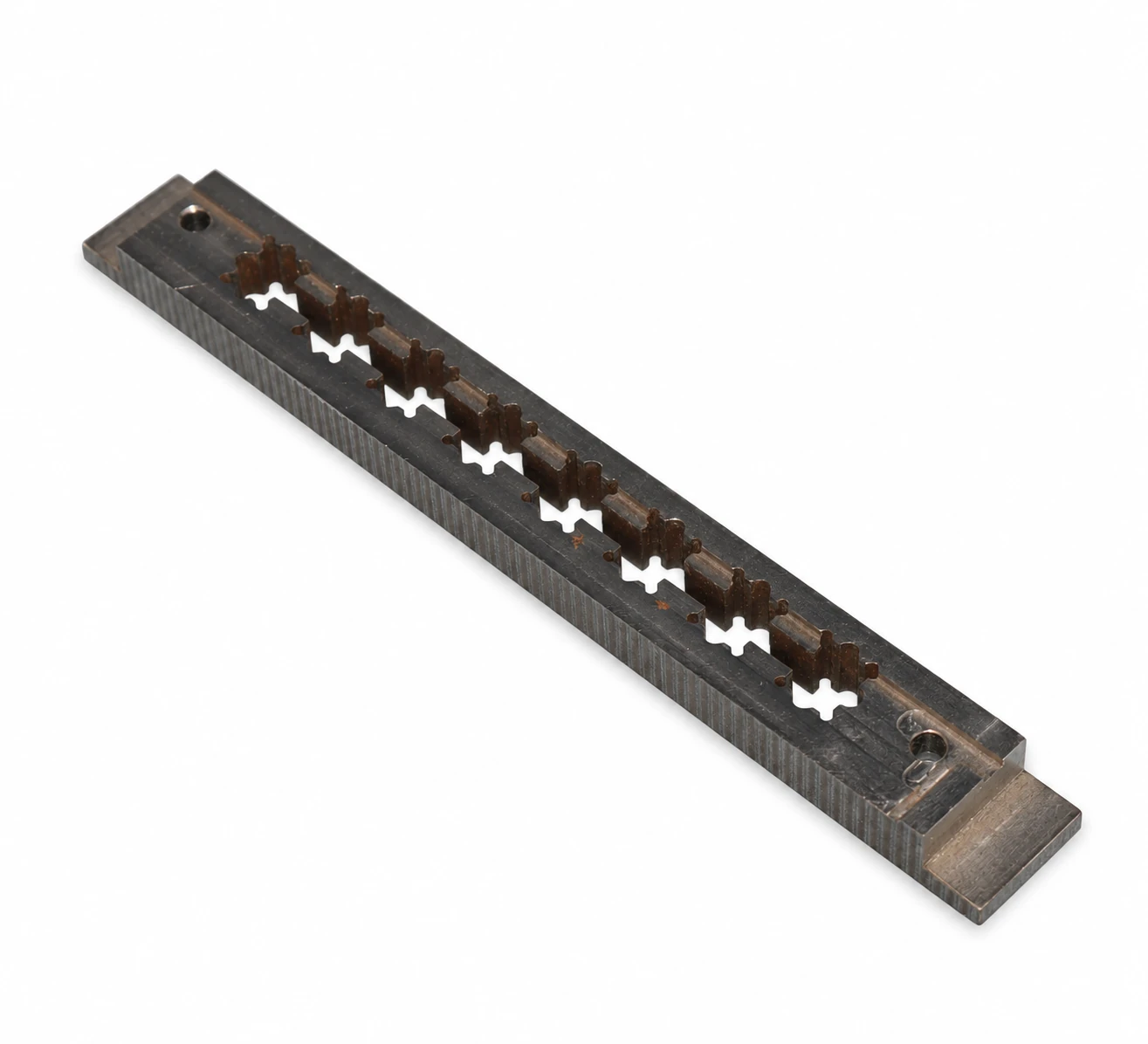
We machine fixture plates, locating pins and bushings, assembly and inspection fixtures, and modular fixturing components, to drawing, with the locating surfaces and fits made and inspected as specified. We can machine hardened and pre-hardened materials and hold the fits the design calls for.
We do not design your process for you, and we do not promise a fixture will repeat to a number we have not been given the part, the datum scheme and the load cycle for. What we will do is tell you when a locating scheme over-constrains the part or when a clamp will fight a locator — those are cheap to fix on the drawing and expensive to fix after the fixture is cut.
What to send with the RFQ
Send the drawing revision, the part to be located and its datum scheme; the locating scheme you intend (which face, how many pins, round versus diamond); the repeatability you need and over how many load cycles; the material and hardness for pins, bushings and plates; the clamp type and force; whether the fixture is for machining, assembly or inspection; and the inspection and acceptance criteria. With those we can machine a fixture that repeats to the number, not one that merely holds the part still.
Frequently asked questions
Why does my fixture not repeat even though the machine is accurate? Almost always the locating scheme, not the machine: the part is under-constrained and rocks, or over-constrained and stresses, or the pin and bushing have worn. Check that exactly six degrees of freedom are removed and that the wear surfaces are hardened and replaceable.
Why two different pins instead of two round ones? Two round pins bind because hole-to-hole distance is never exactly nominal; the part will not seat. A round pin plus a diamond pin fixes one hole in X and Y and lets the second absorb its centre-distance tolerance — that is what makes the part drop in and repeat.
Does a heavier clamp make the fixture more accurate? No. A clamp holds the part against the locators; it does not improve location, and if it also pushes the part it makes location worse. Clamp force should be repeatable and should push the part onto the locators, not away from them.