
On this page
A cold plate for an AI server is decided by four numbers before anyone quotes it: heat load per plate, flow rate with its pressure-drop budget, contact-face flatness, and the leak-test criterion. Put those four on the drawing and the quote becomes a manufacturing question. Leave them vague and every supplier will quote a different product, none of which you can compare.
Why these plates fail in the field, not in the drawing
A liquid cold plate sits next to compute hardware worth more than the plate by three orders of magnitude. That changes the economics of failure. A joint that weeps slightly is not a warranty annoyance; it is a rack-down event. In practice the failures we see quoted back to us cluster around four things: a port or seam that passes a pressure-hold but not a tracer-gas test, a contact face that was flat on the bench and no longer flat under clamp load, machining debris left in a channel that ends up in the loop, and mixed metals with the wrong coolant chemistry.
None of those are exotic. All of them are decided on the drawing.
The four numbers to fix before you ask for a price
| Number | Why it changes the part | What belongs on the drawing |
|---|---|---|
| Heat load per plate | Sets channel width, depth and the amount of copper versus aluminium you are willing to pay for. | Watts per plate plus the die or IHS footprint the heat enters through. |
| Flow rate and pressure-drop budget | A plate that meets its thermal target but eats the whole loop budget is not a working plate. | L/min at operating point, and the kPa you can afford to lose across the plate. |
| Contact-face flatness | Governs how thin the thermal interface layer can be, and whether it stays uniform. | Flatness value, over which area, and whether it applies free-state or assembled. |
| Leak-test criterion | Determines joint design, fixture, and whether the part is even testable at your limit. | Method, tracer gas or liquid, test pressure, acceptance rate, and the record you want back. |
“Helium leak tested” is not a specification
It is the sentence we most often have to send back. Two suppliers can both write “helium leak tested” and mean completely different things: one is doing a sniffer pass at the ports, the other is a chamber test on the whole assembly with a calibrated rate. The part is not the same, and neither is the price.
Write it the way a test lab would read it: tracer gas, test pressure, whether the part is evacuated or pressurised, the acceptance rate in atm·cc/s or mbar·L/s, how long the reading has to stabilise, and what background leakage your fixture contributes. If you do not have an internal standard yet, the Open Compute Project publishes a vendor-neutral Single-Phase Direct-to-Chip Cold Plate Test Specification, version 1.0.0 that is a reasonable place to start the conversation. Review its applicable test sections with your engineering team and customer; citing this document does not establish OCP certification or a completed test.
Flatness has two states, and they are not the same number
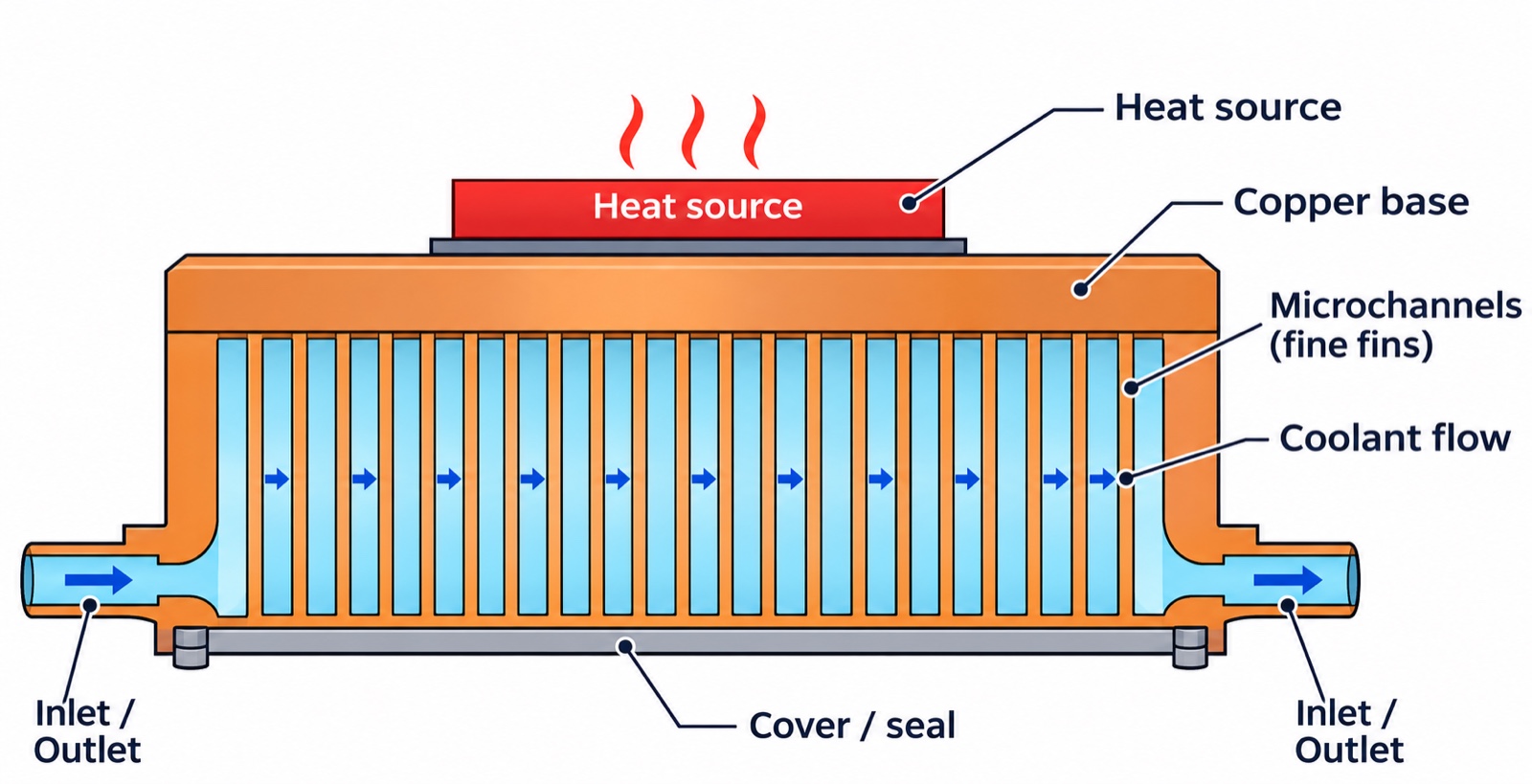
A plate can be flat on the surface table and out of flat once it is bolted down. Machining releases stress, clamping adds it, and a thin lid over a wide channel is the least forgiving geometry in the shop. So the drawing has to say which state you mean. “0.05 mm over the die area, measured free-state” and “0.05 mm assembled under the specified clamp load” produce different parts, and the second one requires a fixture to verify.
Our own rule of thumb: if the number is written without a state, ask which one the supplier intends to measure. The answer tells you whether they have made this part before.
Cleanliness is a channel problem, not a cosmetic one
Machined channels collect burrs, chip fines and lapping residue in places you cannot see. A loop with a filter will eventually tell you about it, usually downstream of a pump that has already been damaged. If the plate goes into a server loop, specify a cleanliness limit and an end-of-line flush instead of assuming the supplier cleans to an unstated standard. Automotive-style particulate cleanliness standards exist for exactly this reason; the useful part is agreeing which limit, at which point in the process, and what evidence you receive.
What we make, and what we do not
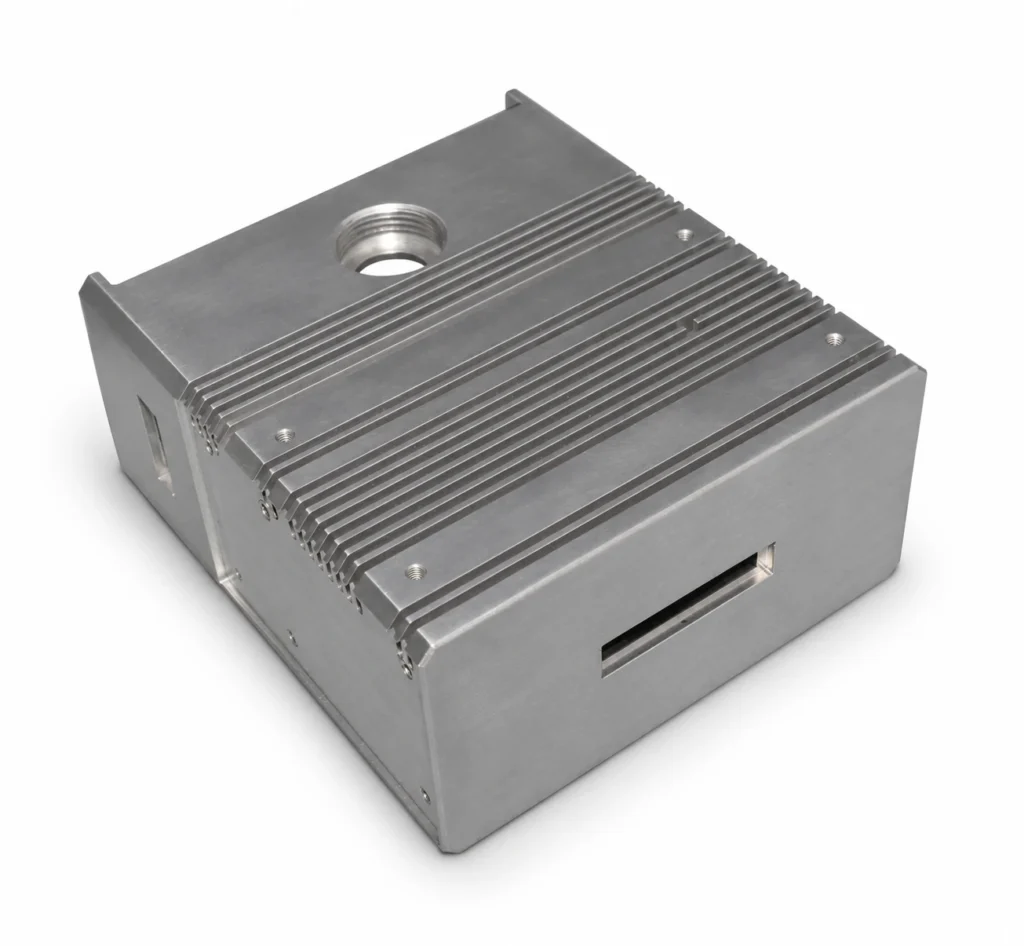
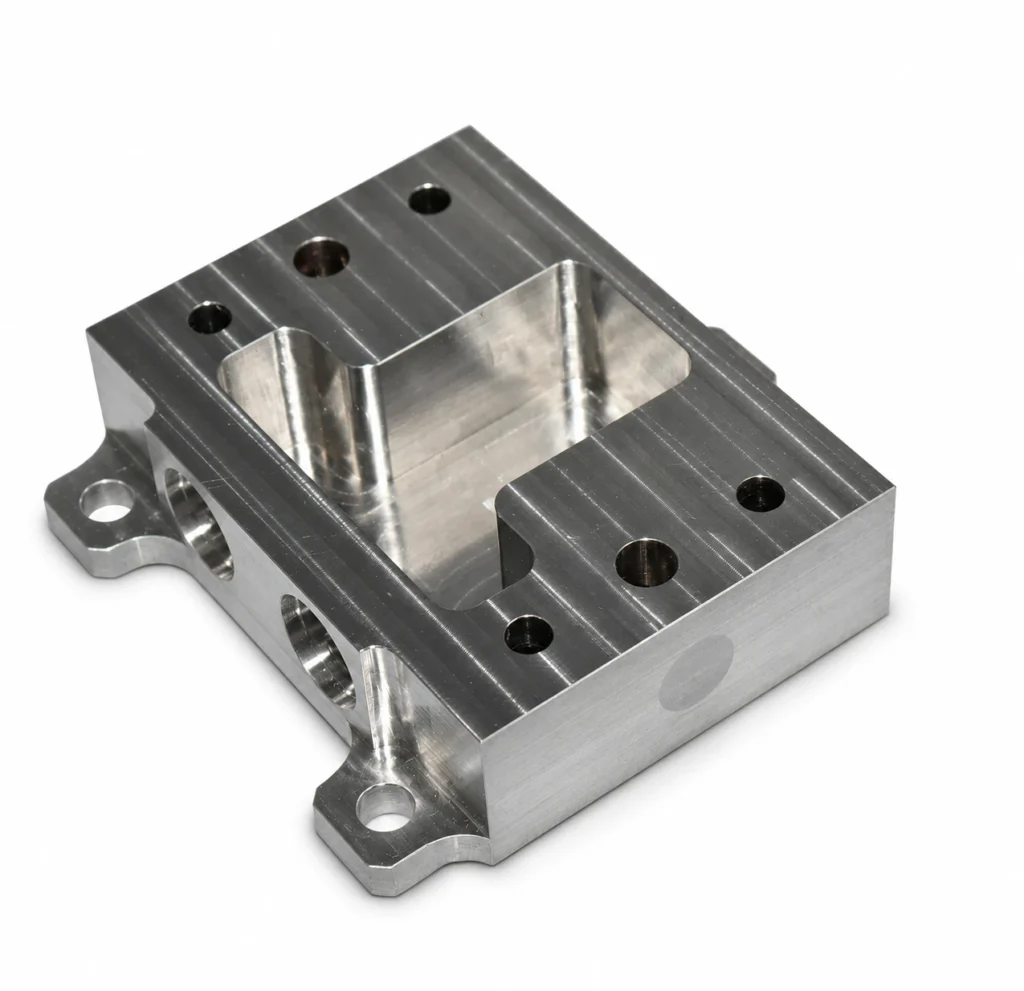
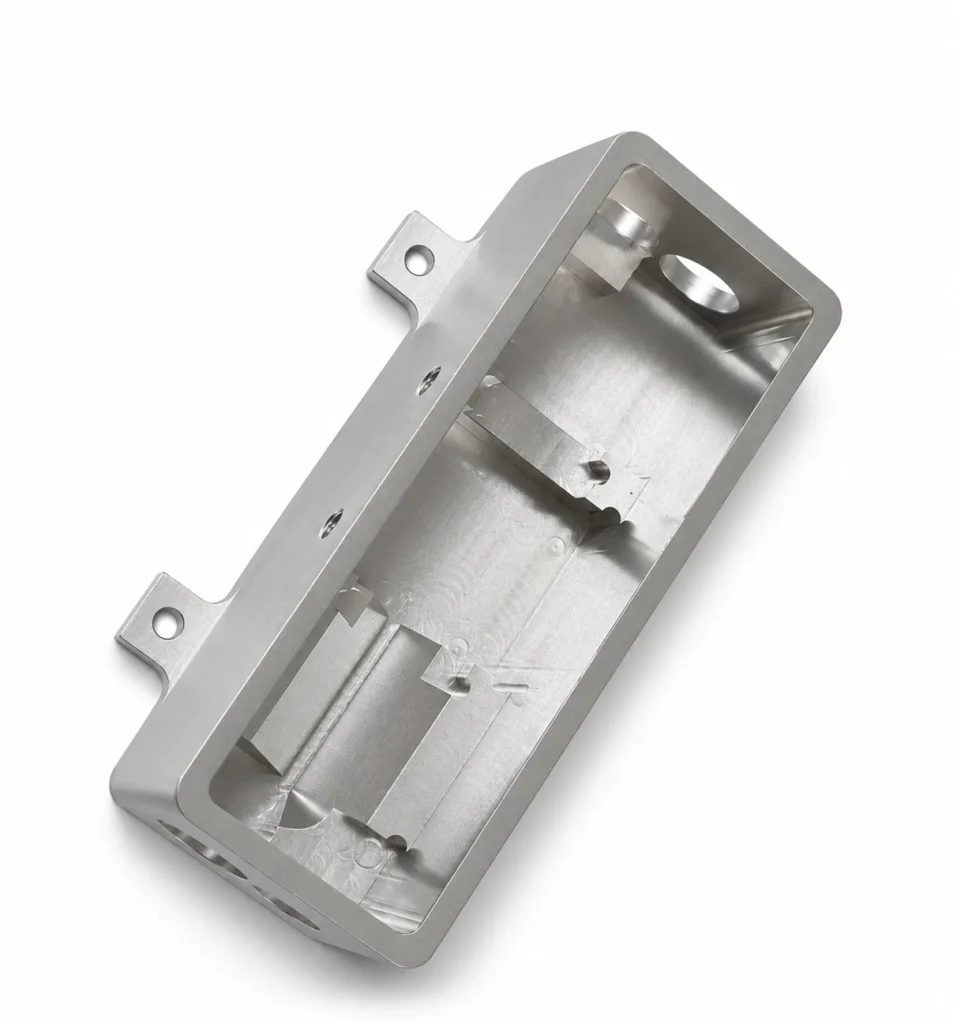
JYX machines cold plates and heat sinks in aluminium 6061, 6063 and 7075, and in copper, on the aluminium liquid cold plate and CNC machining routes. Closure is done by precision TIG and resistance welding or as a brazed assembly on our precision welding and vacuum brazing capability, and leak testing — air or helium — is quoted when you specify it, with the medium, pressure and acceptance criterion agreed before the first part is made.
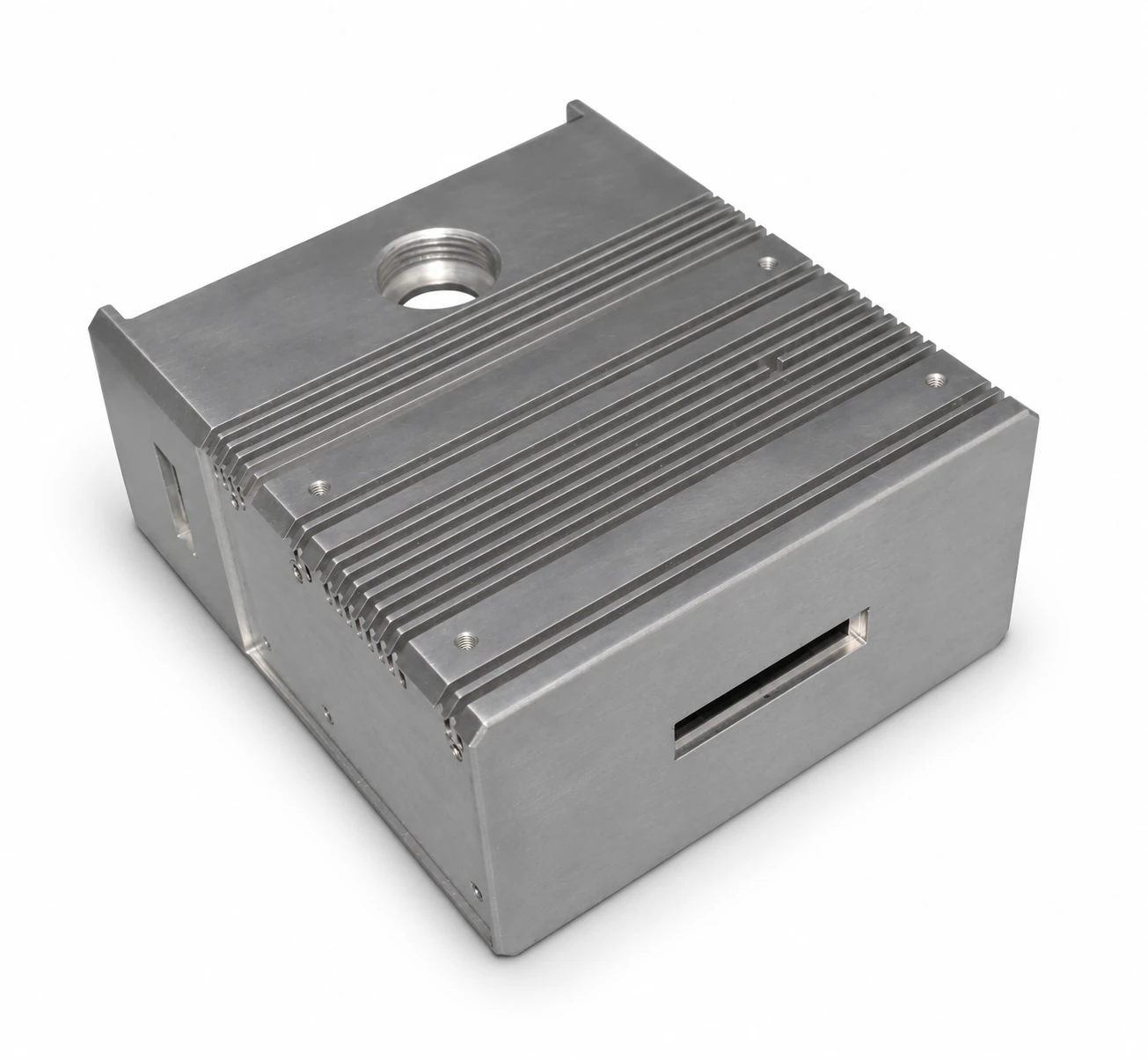
Two things we will not do. We will not publish a thermal resistance curve for a plate we have not measured; if your programme needs one, the test has to be defined and funded as part of it. And we are not a coolant distribution unit or manifold supplier — if the RFQ includes the CDU, that part of the scope belongs with someone else.
Specify the mounting and seal interfaces with the cold-plate sealing-face guide.
What to send with the RFQ
- 2D drawing and 3D model with revision; the mating surface and the die footprint called out.
- Material and whether mixed metals are acceptable in your loop.
- Channel geometry or the closure method you require, plus port type, thread and orientation.
- Flatness with its state (free or assembled), and the clamp load if it is assembled.
- Leak-test method and acceptance rate; cleanliness limit; any required test record.
- Prototype quantity, expected annual volume, and the date you actually need parts.
Send that and the reply is an engineering review rather than a request for more information. Upload the drawing and we will review channels, joining, flatness and test scope against the part, usually within one to two business days.
Frequently asked questions
Do I need a helium leak test, or is pressure-hold enough?
Pressure-hold finds gross leaks and is fast, but it will not resolve a pinhole in a braze seam. If the plate sits above compute hardware, specify tracer gas and an acceptance rate. If it is a bench prototype, a pressure-hold with a stated drop and hold time is usually a reasonable first gate.
Can you work to an OCP cold plate specification?
We can review a programme against it, but adopting an external test specification is a decision for your engineering team and your customer, not something a machine shop should agree to on your behalf. Send the spec with the drawing and the test scope gets quoted explicitly.
What is the minimum order quantity?
Prototype and low-volume runs are welcome with no minimum order quantity. Pricing and quantity are assessed against the drawing, the process and the test scope you specify.