
On this page
Direct answer: joining a copper base plate to a CNC-machined aluminium frame is hard because the two metals melt at very different temperatures (copper ≈1083 °C, 6061 aluminium ≈582–652 °C), expand differently as they heat and cool (≈16.9 vs ≈22.2 ×10⁻⁶/K), and react at the interface to form brittle intermetallics. A successful low-temperature joint protects the aluminium, wets both surfaces despite the tenacious aluminium oxide, controls thermal distortion, and is proven leak-tight by test — not by a continuous-looking seam. This deep-dive explains the metallurgy, the numbers, the manufacturing workflow and the inspection logic.
Product structure and material selection
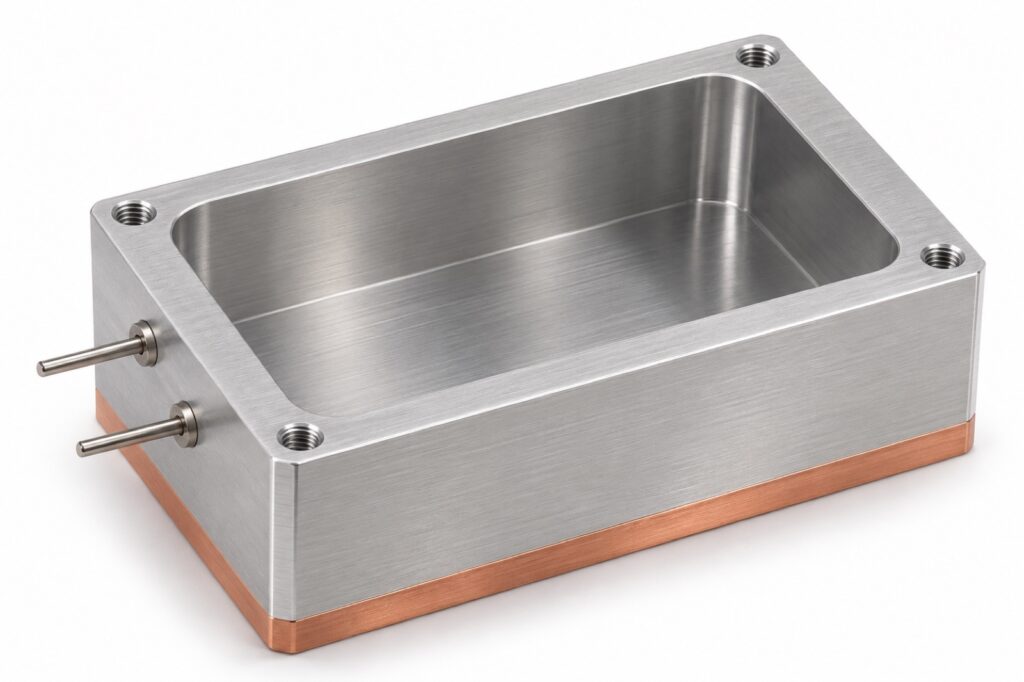
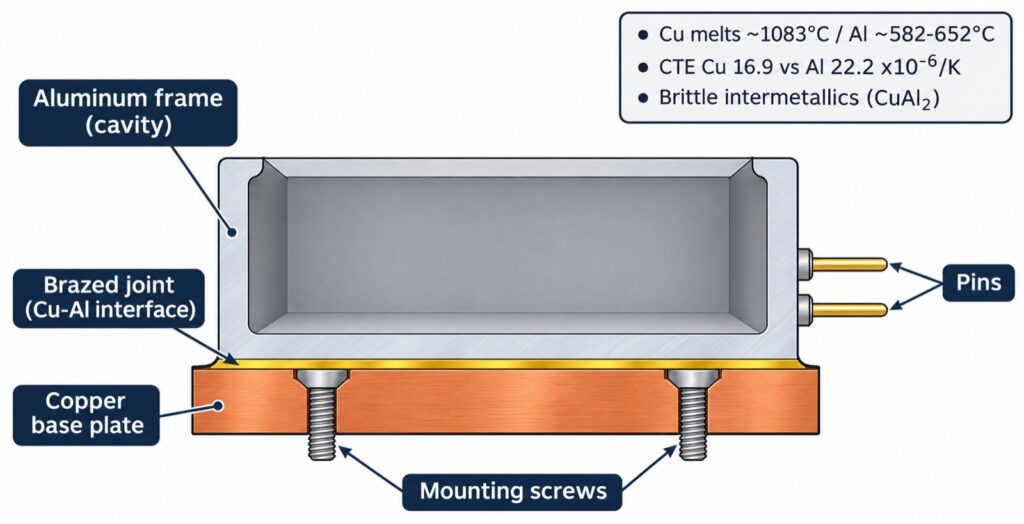
The copper base plate provides a conductive structural base and potential heat-transfer path; its flatness, surface cleanliness and interface geometry matter for assembly quality. The aluminium frame forms the deep rectangular cavity and mounting structure, where tool rigidity, wall straightness, residual stress and joint-face geometry must be managed. The rectangular joining interface — its long edges and four corners — introduces challenges in joint clearance, filler distribution and thermal uniformity.
Why copper and aluminium together
Combining copper’s heat-transfer capability with aluminium’s low weight and good machinability is attractive for thermal-mechanical housings. The cost is that dissimilar-metal joining concentrates several physical problems in one interface — melting-point gap, oxide, expansion mismatch and intermetallic formation — all governed by the chosen filler and time–temperature profile.
Challenge 1 — Different melting temperatures
Reference melting points make the gap concrete: pure copper melts near ~1083 °C (C11000 ≈1083 °C) while 6061 aluminium melts over ~582–652 °C. The joining process must therefore work well below the aluminium’s solidus so the aluminium structure is never at risk, while still forming an adequate bond. Filler compatibility, heating rate, peak temperature, dwell time and cooling conditions are all critical. Whether a given process is classified as soldering or brazing depends on the filler’s liquidus temperature: roughly below 450 °C is generally soldering, at or above 450 °C (below the base-metal solidus) is generally brazing — so the process term should be confirmed against the actual filler and specification.
Challenge 2 — Oxide films and poor wettability
Aluminium develops a tenacious oxide layer (Al₂O₃) that prevents wetting by a joining filler; copper surfaces also require thorough cleaning. Surface preparation, oxide management, and an appropriate flux or a controlled atmosphere are central to consistent joining. In production this usually means either a controlled-atmosphere brazing (CAB) process with a suitable flux, or vacuum brazing (VAB) where the environment removes the need for flux — each with its own fixturing and cleanliness requirements.
Challenge 3 — Thermal-expansion mismatch
Copper and aluminium expand differently. Reference linear-expansion coefficients (CDA data) are about 16.9 ×10⁻⁶/K for copper (C11000/C12200) and 22.2 ×10⁻⁶/K for aluminium. Free differential movement can be estimated with ΔL = α·L·ΔT. For a 300 mm length and a 60 K rise, the free expansion is ≈0.30 mm in copper vs ≈0.40 mm in aluminium — a ~0.095 mm difference at 300 mm (≈0.19 mm at 600 mm). Bonded parts are not free strips, so this figure is a review input for support and thermal-cycle design, not a slot allowance: interface restraint, supports, joint stiffness and possible plastic deformation all affect the real stress.
Challenge 4 — Interfacial reactions (brittle intermetallics)
Depending on the filler and joining temperature, copper–aluminium interfaces can develop brittle intermetallic phases (for example CuAl₂ and related Cu–Al compounds). Excessive reaction-layer growth reduces joint toughness and can make the joint prone to cracking under thermal cycling. Material selection and a qualified, tightly controlled time–temperature process — keeping the reaction layer thin and uniform — are what protect joint integrity.
Challenge 5 — Continuous rectangular joint
The extended rectangular interface and its corners require consistent joint clearance and filler distribution. Local gaps, uneven heating or misalignment can produce incomplete joining or visible discontinuities. A continuous-looking seam does not by itself prove leak-tightness.
Challenge 6 — Post-joining dimensional accuracy
The product must meet its drawing requirements after thermal processing, not merely before it. Flatness, cavity size, perpendicularity and mounting-hole positions should be checked after joining, with additional tests where functional requirements demand them. Expansion mismatch and thermal distortion make post-join inspection essential — pre-join dimensions can be misleading.
CTE at a glance (review inputs)
| Material | Reference melting (approx.) | Linear CTE (approx.) |
|---|---|---|
| Copper (C11000) | ~1083 °C | ~16.9 ×10⁻⁶/K |
| Aluminium 6061-T6 | ~582–652 °C | ~22.2 ×10⁻⁶/K |
Values are cited from CDA tables and standard reference data for orientation; use alloy- and temperature-specific data for an actual design.
CNC machining considerations
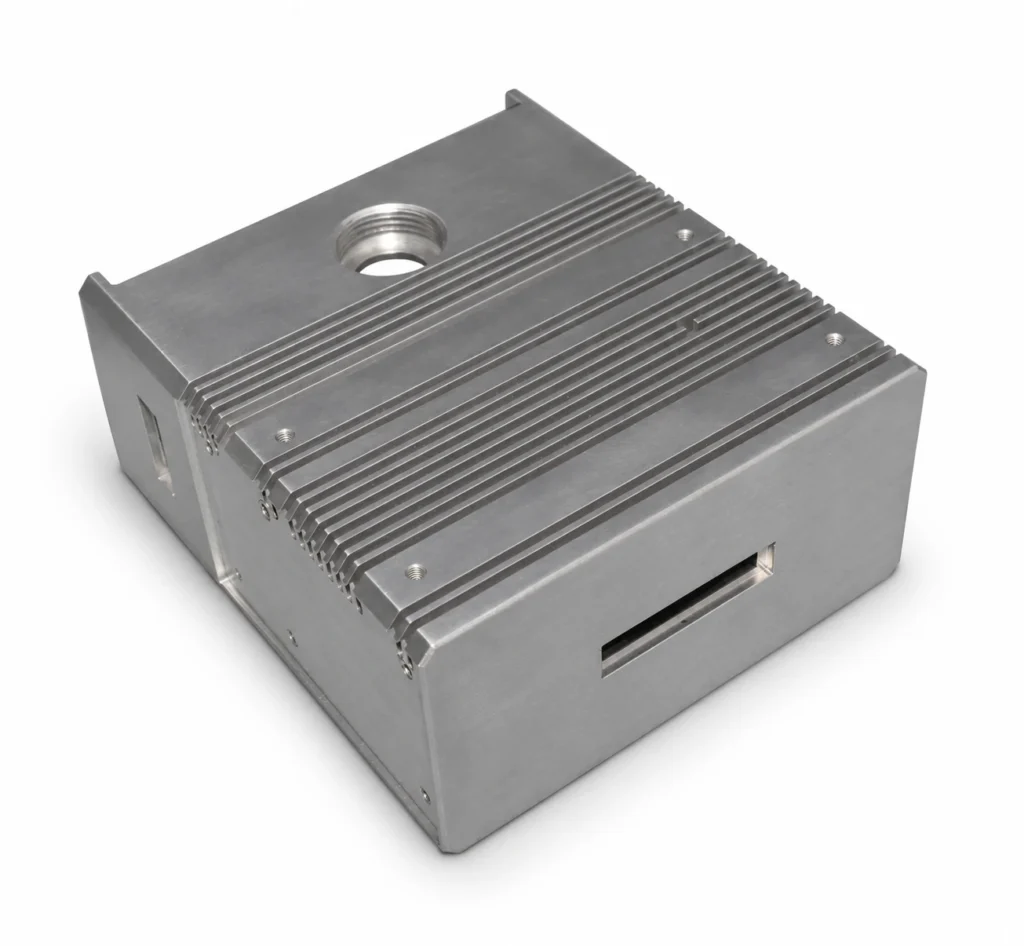
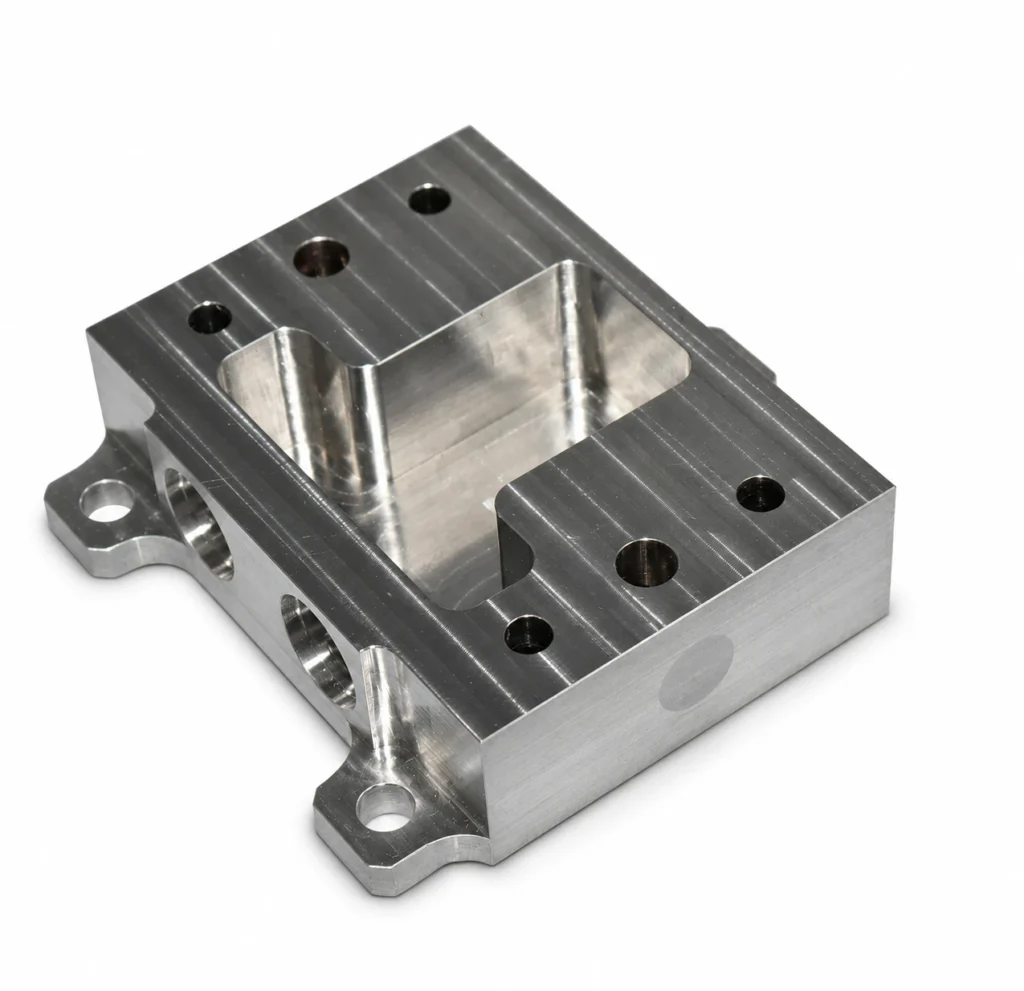
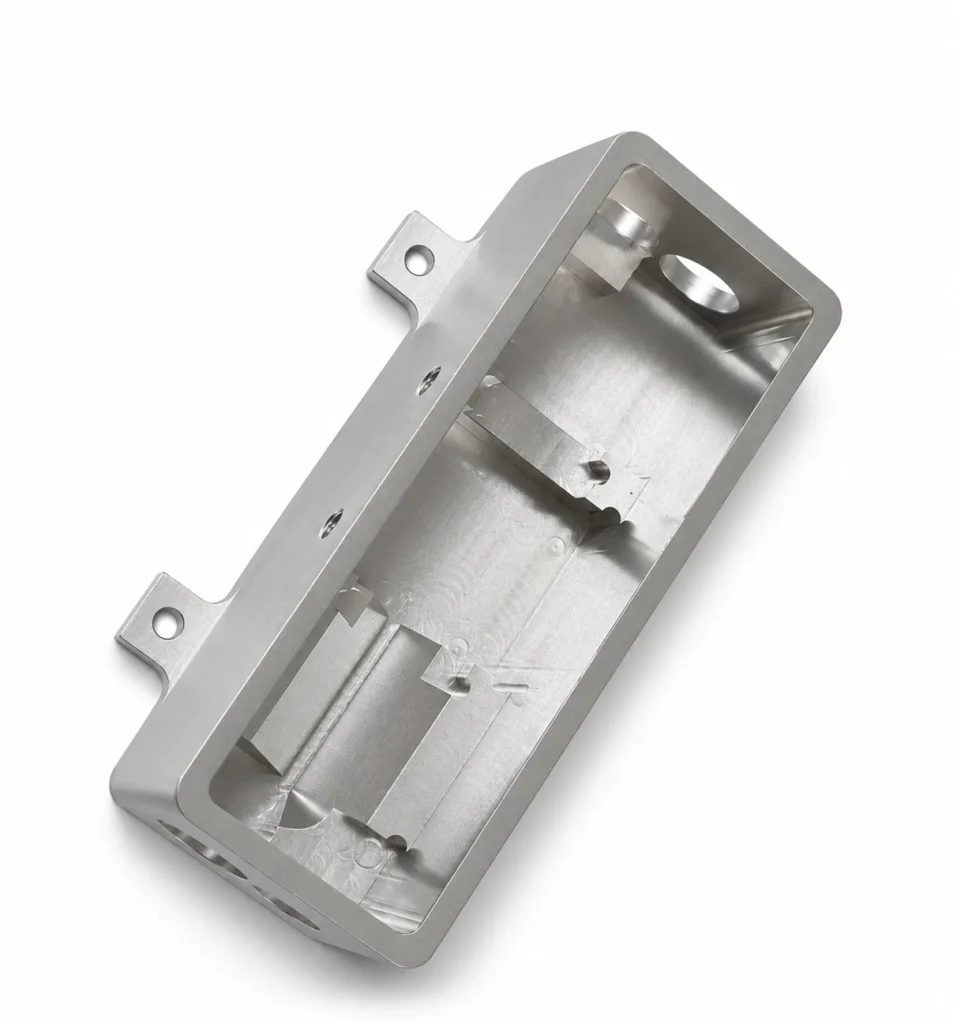
The aluminium frame requires deep-cavity machining with attention to tool overhang, chatter, wall geometry, burrs and distortion during material removal. Copper machining calls for control of burr formation, surface finish and base flatness. Machined joint faces should be designed and inspected with the joining process in mind — joint gaps, filler access and clamping are easier to control if the geometry is designed for them.
Representative manufacturing workflow
(1) Engineering review of 2D/3D drawings, material grades, critical dimensions, joint requirements and operating conditions; (2) preparation of the specified copper and aluminium stock; (3) precision CNC machining of the base plate, cavity, mounting features and joint interfaces; (4) cleaning and surface preparation for the selected filler and process; (5) assembly and fixturing to control alignment and joint clearance; (6) controlled-temperature joining (solder or braze) with a qualified profile and compatible filler; (7) post-process cleaning; (8) quality inspection against agreed acceptance criteria; (9) protective packaging and delivery.
Inspection and verification
Inspection typically covers base flatness (thermal distortion), frame perpendicularity (structural alignment), cavity dimensions (assembly fit), mounting-hole position (installation interfaces), joint appearance (visible discontinuities) and — where required — joint strength and leak testing. Methods and acceptance limits must be defined by the approved drawing and customer requirements. Hermeticity, mechanical strength and reliability cannot be inferred from photographs.
Potential applications
Semiconductor laser equipment, optical and photonic assemblies, industrial electronics, scientific instruments, precision inspection systems and custom thermal-management modules. Suitability for any particular application requires engineering verification.
Integrated manufacturing capability
JYX CNC supports custom precision components through CNC machining, material-specific surface finishing, in-house brazing equipment and dimensional inspection. Integrating machining and joining considerations early can improve manufacturability and reduce assembly risk. Actual joining feasibility depends on the specified alloy grades, filler, service conditions and qualification requirements.
Frequently asked questions
Is copper-aluminium joining soldering or brazing?
It depends on the filler’s liquidus temperature — below about 450 °C is generally soldering, at or above 450 °C (below the base-metal solidus) is generally brazing. The correct term is fixed by the actual filler and specification, not by the metals being joined.
Why does the joint distort?
Mainly thermal-expansion mismatch (~16.9 vs ~22.2 ×10⁻⁶/K) plus residual stress from the thermal cycle. Joint design, fixturing and controlled cooling manage it, but post-join dimensional checks are still required.
What makes the joint brittle?
Excessive growth of brittle Cu–Al intermetallic layers (e.g. CuAl₂). Keeping the reaction layer thin via a controlled time–temperature profile and suitable filler protects toughness.
Can appearance prove it is leak-tight?
No. A continuous seam can still leak; only a defined leak or proof-pressure test to an agreed method and limit demonstrates sealing.
Engineering takeaway
The principal challenge is not simply bonding copper to aluminium; it is achieving a suitable joint while retaining the geometry and function of a precision-machined housing. The strongest manufacturing approach links material selection, joint design, CNC machining, thermal processing and post-joining inspection into a single controlled workflow.
Discuss a custom copper-aluminium assembly
Developing a custom copper-aluminium housing or dissimilar-metal assembly? Share your drawings, material grades, critical tolerances, expected operating conditions and inspection requirements with JYX CNC for an engineering review.
Review the copper-aluminum brazed housing and joining capability against the project requirements. Send the copper-aluminum assembly drawing for review.
Sources
- Copper Development Association, Architectural Applications (Table 14 linear-expansion coefficients) and Copper for Busbars. copper.org
- Reference melting point & hardness data (C11000 copper ≈1083 °C; 6061-T6 aluminium ≈582–652 °C). reference table
- Controlled-atmosphere brazing (CAB) vs vacuum brazing (VAB) — process background. Seco/Warwick
Figures are cited for engineering orientation. Actual filler, process temperature, joint strength, hermeticity and tolerances are governed by the approved drawing and validation records; this article claims no specific achieved values.