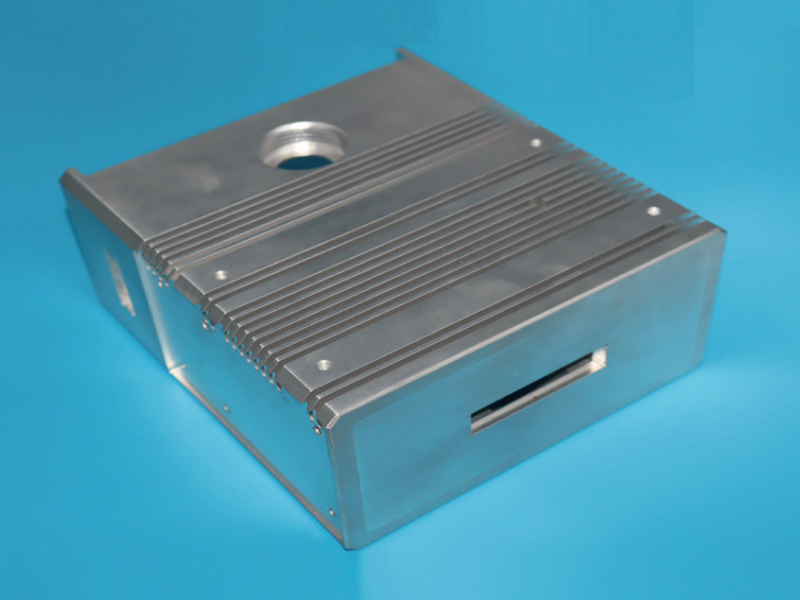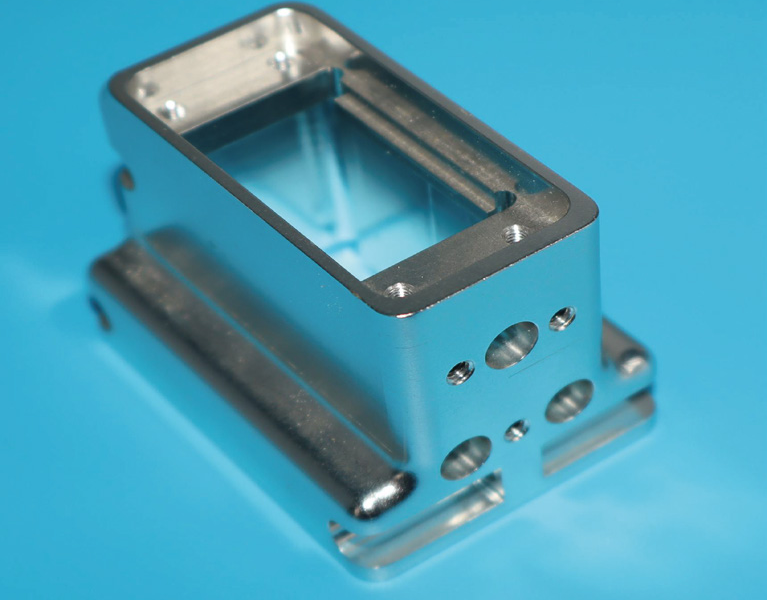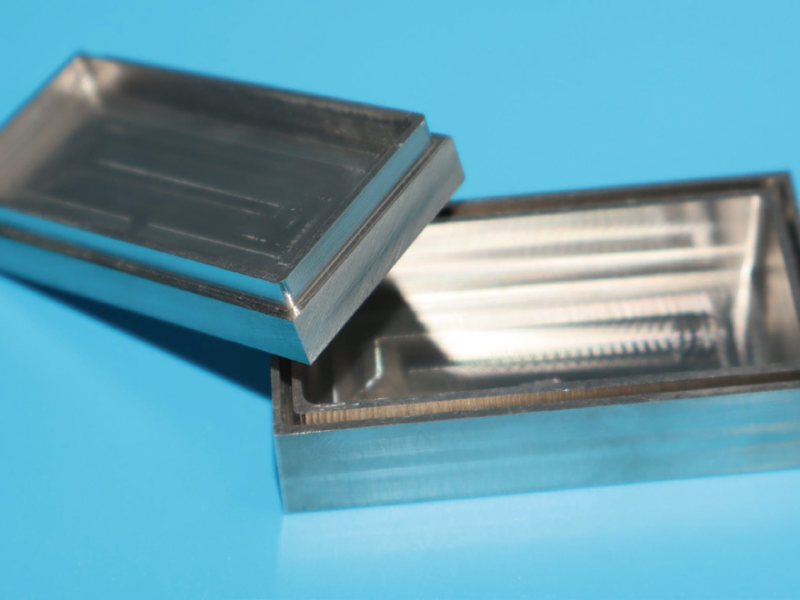

In one paragraph: Kovar (ASTM F15) is a nickel–cobalt–iron alloy engineered so its thermal expansion matches borosilicate glass and alumina ceramics — which is why hermetic laser and semiconductor packages are made from it. It machines “gummy”: sharp carbide, rigid setups and disciplined speeds keep it cooperative, and most package parts finish with a plated Cu/Ni/Au stack for solderability and corrosion protection.
Why Kovar exists: expansion matching
When a metal housing must seal to glass or ceramic through temperature cycles, the two materials must grow at the same rate — otherwise the seal cracks or leaks. Kovar’s coefficient of thermal expansion (roughly 5.0–5.9 × 10⁻⁶/°C through the useful sealing range) tracks borosilicate glass and high-alumina ceramics closely, where aluminum (≈ 23 × 10⁻⁶/°C) and stainless steel (≈ 17 × 10⁻⁶/°C) would pull away. That single property is the entire reason laser diode packages, fiber-optic feedthroughs and MEMS housings use it.
How it behaves on the machine
- Work-hardening tendency — dull tools and dwell harden the surface and destroy the next cut. Fresh sharp carbide, positive geometry, and consistent chip load are the discipline.
- Stringy chips — chip control matters more than in steel; parameters that keep chips moving protect surface finish.
- EDM as a complement — fine slots, small precise openings and hardened states suit wire and conventional EDM where milling reaches its limits.
- Deburring discipline — burrs at sealing surfaces are unacceptable in a part that will be cleaned, baked and sealed; specify edge conditions on the drawing.
Features that decide package quality
On a typical laser package housing, the critical items are the flatness of the sealing platform, hole position for fiber or lens alignment, and surface finish on optical seats. These are the features worth tight callouts and CMM verification; the rest of the part can stay at general tolerance. Our published benchmarks page states what each process holds, and DFM review maps your callouts against them before quoting.
Plating: the invisible half of the spec
A machined Kovar part is rarely shipped bare. The usual stack is copper (stress-relief and conductivity) → nickel (diffusion barrier) → gold (solderability, corrosion resistance, wire-bond friendliness). Plating thickness and coverage are part of the part’s function — a beautifully machined housing with thin nickel will fail in service. Specify thickness per layer and coverage on critical zones, or ask the supplier to propose a stack against your assembly process. See our companion guide on gold plating types for precision components.
When you do not need Kovar
Non-hermonic or prototyped assemblies can often use aluminum or stainless at far lower cost — Kovar earns its price when the seal is real. If your part does not seal to glass/ceramic, a DFM conversation is worth having before defaulting to it.
Sourcing pointer
When comparing suppliers for Kovar package parts, ask three questions: how they verify sealing-face flatness, what plating stack they run as standard, and for an example of a hermetic part they’ve shipped. Our laser package housing page and machining case studies carry those specifics — and drawings can go directly to engineering review, typically with an answer in 1–2 business days.