
On this page
Engineering summary. A liquid-cooled cold plate must balance heat removal, pressure drop and production reliability. Start with the heat load and coolant conditions, then choose channels that can be machined, sealed, cleaned and inspected. Verify leak integrity and thermal performance separately.
| Design choice | Production benefit | Constraint to review |
|---|---|---|
| Conventional milled passages | Accessible machining, cleaning and inspection | Flow distribution and available cooling footprint |
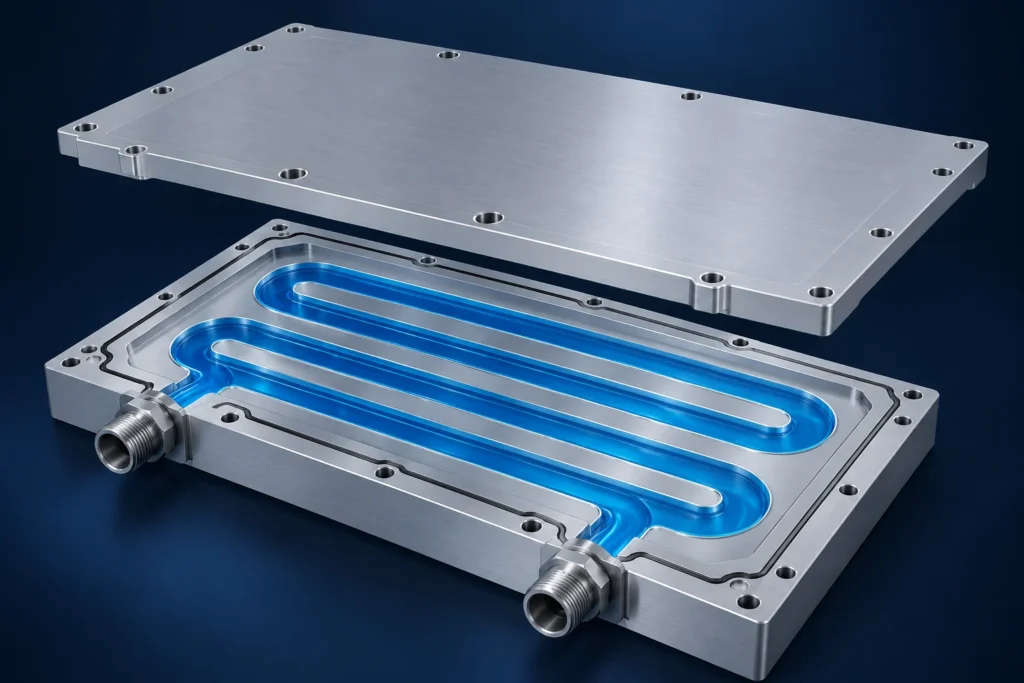
| Multi-pass channels | Routes coolant around the heat-source footprint | Pressure drop, dead zones and cleaning access |
| Microchannels | High surface area in compact structures | Dimensional control, filtration, blockage and joining quality |
| Multi-piece joined plates | Enclosed internal passages | Sealing lands, distortion and internal inspection |
Introduction
As semiconductor laser power density rises, natural convection and conventional finned heat sinks may not provide sufficient cooling within the available footprint. Liquid cooling can move heat away from a compact package more effectively, but the result depends on more than the nominal channel area. Channel geometry, flow distribution, pressure drop, sealing quality, material compatibility and the thermal contact between the laser package and the cold plate all matter. The 2021 review by Yan and colleagues describes large-channel and microchannel water cooling among the approaches studied for high-power semiconductor lasers, while also highlighting manufacturing complexity and the risk of channel blockage as practical challenges.
1. Design the cooling system around the heat load
A cold plate should be designed from a defined thermal and hydraulic requirement. Important inputs include the heat load, allowable device temperature, coolant type, inlet temperature, flow rate, pressure limit, available space and acceptable temperature variation across the mounting surface. A channel that offers strong local heat transfer may also create a larger pressure drop; an overly complex internal path may be difficult to manufacture, clean or inspect.
For high-power laser assemblies, the cooling layout should be coordinated with the mounting footprint and heat source location. The goal is to remove heat from the relevant area while maintaining a stable mounting plane and avoiding excessive temperature gradients that could contribute to package distortion or optical misalignment.
2. Channel architecture: performance versus manufacturability
Possible channel architectures include conventional milled passages, multi-pass channels, baffles or turbulators, and microchannel structures. Larger channels are often easier to machine and clean, while smaller channels can provide a high heat-transfer area within a compact volume. However, microchannels place stricter demands on dimensional control, joining quality and contamination management.
The design should avoid dead zones and abrupt flow restrictions where possible. It should also consider the coolant’s cleanliness, the availability of filtration and flushing, and how the finished part will be inspected. A channel design that performs well in simulation but cannot be reliably machined, sealed or cleaned is not a production-ready solution.
3. Materials and manufacturing routes
Copper is often considered for cooling components because of its high thermal conductivity. Aluminium can be attractive when low mass and manufacturability are priorities, provided the coolant, fittings, surface treatment and corrosion-control strategy are compatible. Other materials may be selected for specific chemical, structural or expansion requirements.
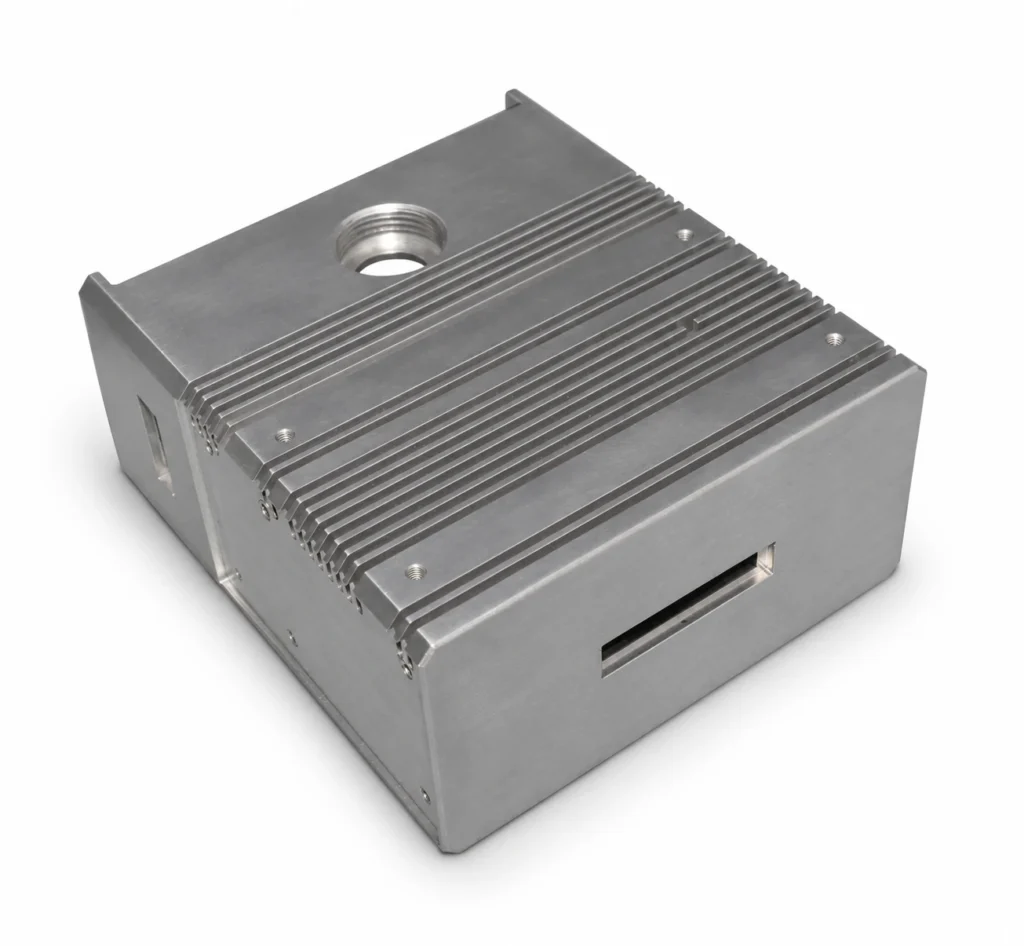
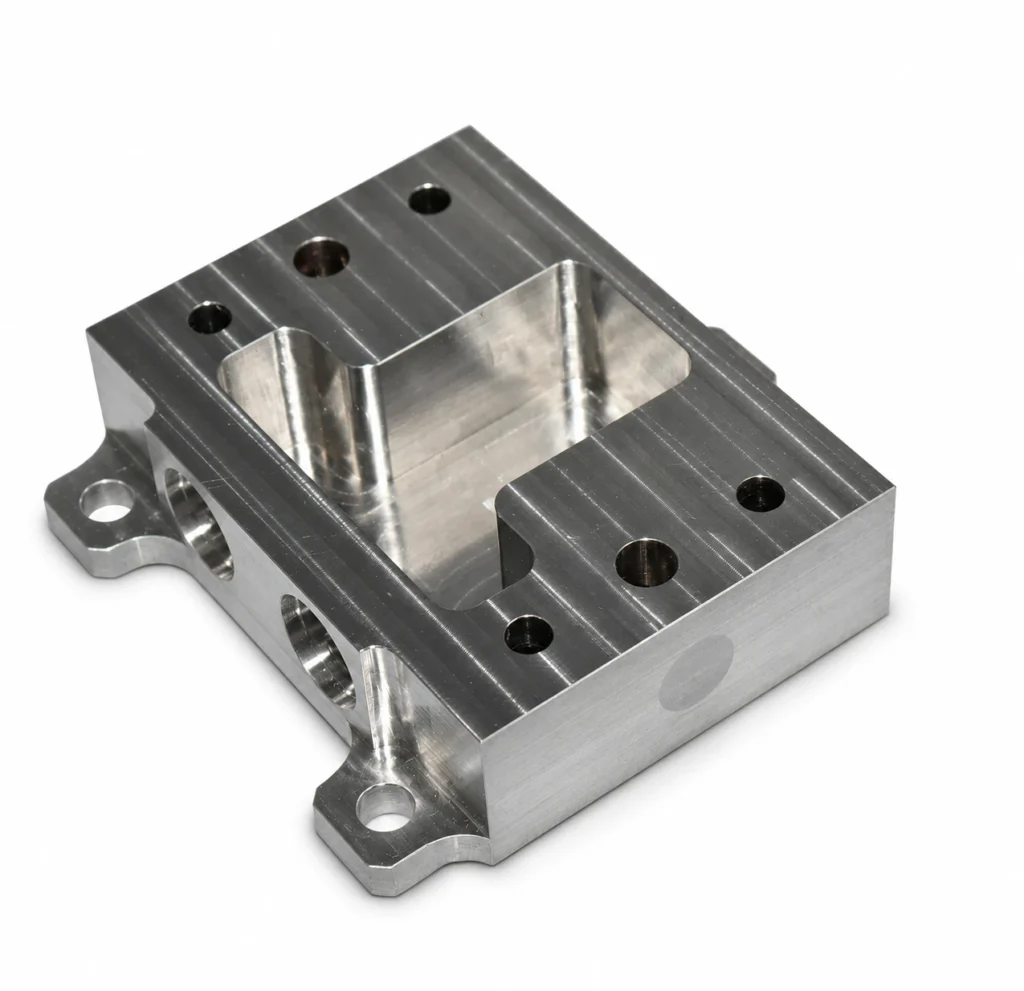
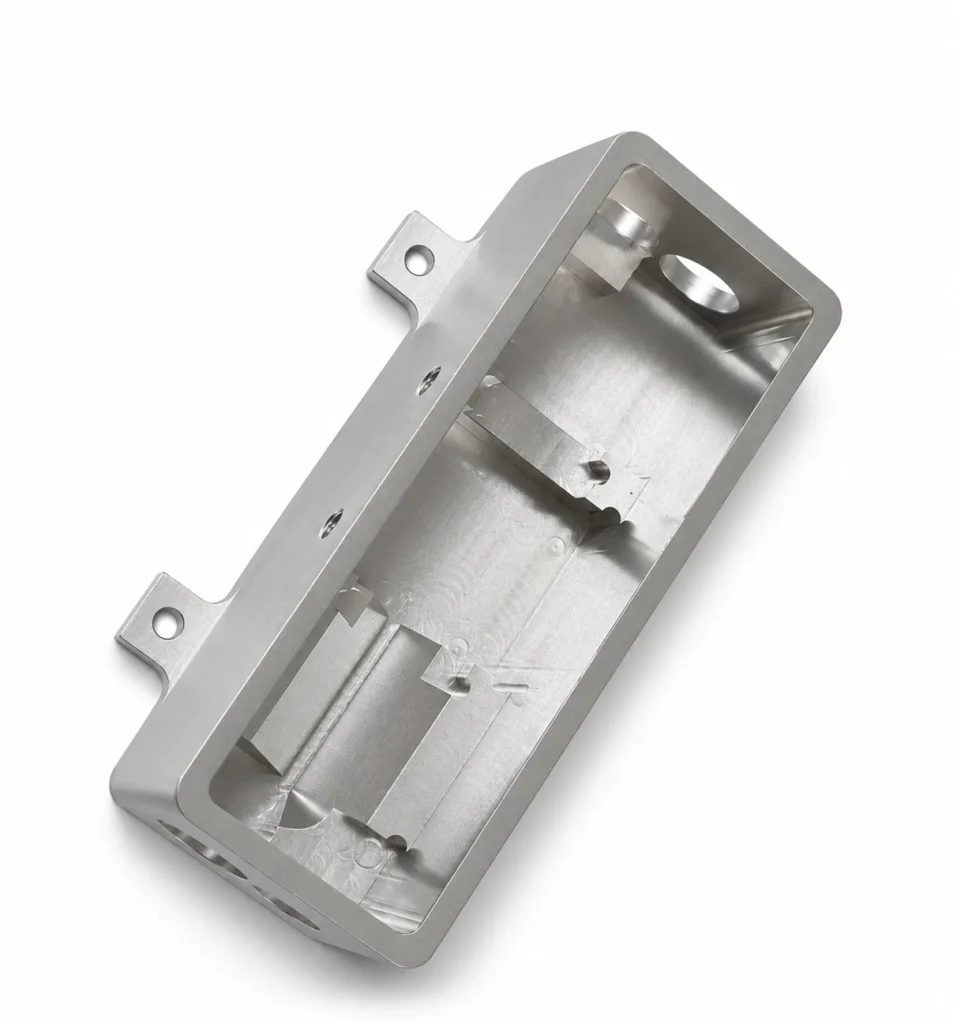
Manufacturing routes depend on the design. A one-piece cold plate may use CNC milling and drilling to create accessible channels. More complex internal passages may require a multi-piece construction followed by brazing or another qualified joining process. Jingyixin’s relevant capabilities include precision CNC machining, aluminium heat sinks, liquid-cooling cold plates and vacuum-brazing experience. Whether a specific cold plate can be produced through a given route depends on channel geometry, material, wall thickness, joining access and the customer’s performance specification.
For a multi-piece plate, the design should include suitable sealing lands, joining allowances, datums and inspection access. If the plate is brazed, distortion and internal blockage must be considered as part of process development.
4. Critical process controls
Key production controls may include:
- CNC control of channel width, depth, wall thickness, inlet/outlet ports and mounting-face geometry.
- Burr prevention and removal, especially at channel intersections and port edges.
- Cleaning and flushing to remove chips, abrasive particles, oil and residues.
- Joining-process control, including joint preparation, fixture design, thermal cycle and post-process dimensional checks.
- Surface-treatment and coolant-compatibility review where coatings or corrosion-control measures are required.
- Traceability of material batches and joining parameters for projects with formal qualification requirements.
These controls should be defined according to the actual design. Microchannels, for example, may need different inspection and cleaning methods from conventional milled channels.
5. Inspection and validation methods
A cold plate should be assessed for both structural integrity and thermal-hydraulic performance. Depending on the customer’s specification, the validation plan may include:
- Dimensional inspection of mounting surfaces, ports, channel features and critical datums.
- Pressure or leak testing using a defined pressure, duration and acceptance criterion.
- Flow-rate and pressure-drop measurement at specified test conditions.
- Thermal testing using a controlled heat load, coolant temperature and flow rate.
- Internal cleanliness checks and flushing verification.
- Joining inspection where applicable, using methods appropriate to the material and joint geometry.
Leak testing must use a method and acceptance limit suitable for the operating pressure and application. A pressure-hold test, a liquid leak test and a helium leak test are not equivalent; the correct method should be agreed with the customer. Thermal resistance values should likewise be reported with the test setup, flow rate, coolant temperature and heat load so results can be compared meaningfully.
6. Balancing thermal performance with production reliability
The best cold plate is not necessarily the one with the smallest channel or the most complicated internal geometry. For production, the design must balance thermal resistance, pressure drop, manufacturing cost, cleaning access, joining reliability and long-term maintenance. A modestly simpler channel layout may be preferable if it produces repeatable performance and can be inspected efficiently.
Early design-for-manufacturing review is especially useful. A supplier can assess tool access, minimum wall thickness, joining seams, port positions, machining datums and inspection strategy before the drawing is frozen. This reduces the risk of late changes after prototype testing.
Conclusion
Liquid cooling is a system-level engineering solution: channel geometry, materials, precision machining, joining, cleanliness and verification all contribute to the final result. For laser and optoelectronic equipment, a production-ready cold plate should demonstrate not only acceptable dimensions but also stable flow, leak integrity and thermal performance under agreed test conditions.
Reference
Yan, Y., Zheng, Y., Sun, H., & Duan, J. (2021). Review of Issues and Solutions in High-Power Semiconductor Laser Packaging Technology. Frontiers in Physics, 9, 669591.
Technical Note
This article draws on published research and general engineering principles to provide insights into precision manufacturing and thermal management. Actual material specifications, manufacturing processes, tolerances, performance requirements, and inspection criteria are evaluated on a project-by-project basis in accordance with approved engineering drawings and customer specifications. All product capabilities and performance claims are subject to verification for the specific application.
Engineering questions
Are microchannels always better than conventional cold-plate channels?
No. Smaller channels may provide more heat-transfer area in a compact volume, but also require stricter control of pressure drop, cleanliness, joining and inspection. Compare the complete thermal and hydraulic requirements.
Does a leak test establish cold-plate thermal performance?
No. Leak testing checks integrity under a defined method and acceptance limit. Thermal performance requires a separate test with a stated heat load, coolant temperature, flow rate and measurement setup.
What should a liquid-cooled cold-plate RFQ include?
Include drawings and models, material, heat load, coolant type, inlet temperature, required flow, pressure limits, mounting-face requirements, port details, quantity, joining requirements and the required leak and thermal test conditions.
Related engineering resources
- Laser package housings
- Aluminium liquid cold plates
- Precision CNC machining
- Aluminium vs copper cold plates
- Semiconductor laser thermal path and material selection
Discuss a component drawing
Share your drawing, material, quantity and acceptance criteria with Shenzhen Jingyixin Machinery Technology Co., Ltd. (JYX) for a project-specific manufacturability review.
Request a quote with your engineering requirements
For specific interfaces and operating inputs, see cold-plate sealing faces and the AI server cold-plate specification checklist.